
So… what’s the opposite of sarcasm?
So… what’s the opposite of sarcasm?
 Barbara Hayes lent me her copy of Playing Pygmalion: How People Create One Another by Ruthellen Josselson. I finally finished it the weekend I went camping by myself. It was hard to read because the writing was terrible (see excerpt below) and because the copy I had was heavily marked up in black pen with underlines, circles and stars by the previous owner of the book, not by Barbara. This excerpt from page 137 is footnoted (12) which indicates that this theory is also found in Dicks (1962) Scharff (1991) and Sander (2004).
People are bonded through their mutual creations, each carrying a part of the other that the other either can’t recognize (in terms of positive aspects) or can’t bear (negative ones) in the self.
To me, this meant that I could consider taking back the parts of myself that I have been projecting onto another. For example, I used to believe that I could not go camping by myself. That is was unsafe and that if anything went wrong, I would be blamed for it (“she was asking for it”). How interesting that I was camping by myself, successfully, when I finished the book.
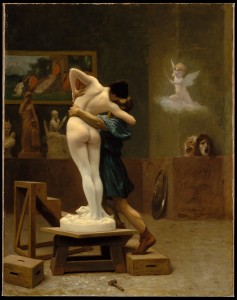
The copy on the back cover was much better written. “Psychoanalytic theory offers a wealth of understanding of how people unconsciously create what they both need and dread. Too often, therapists join their patients in overlooking their own role in creating the relationship in their lives, such that it seems that the patients were simply unfortunate to “have” an ungiving mother or to “find” an unloving spouse.” [image: Pygmalion and Galatea by Jean-Léon Gérôme (French, Vésoul 1824–1904 Paris) Metropolitan Museum of Art, used with permission]

This gallery contains 7 photos.
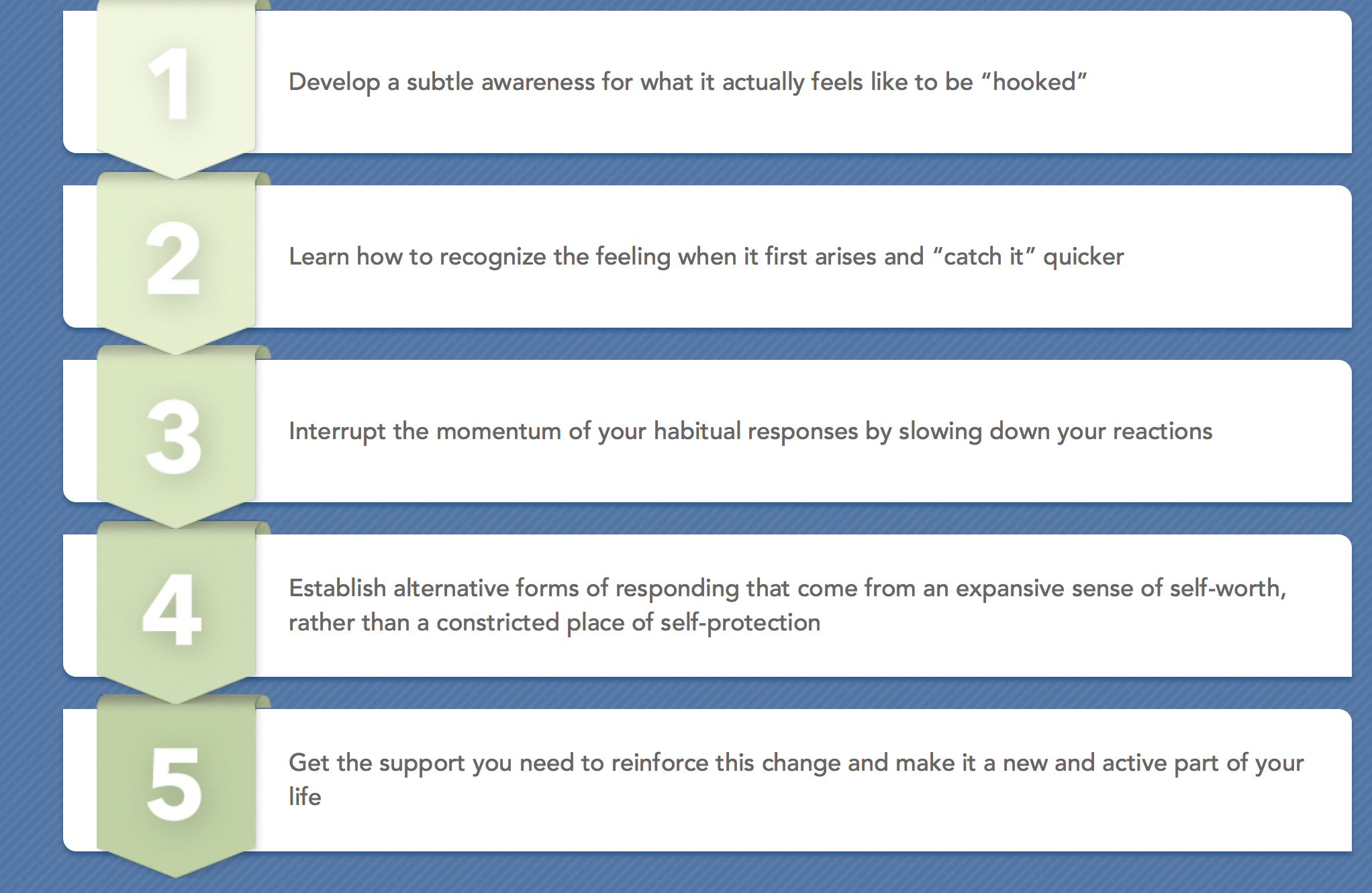
Through the DevChix mail list, found Hypatia.ca and, because I am a fan of Hypatia, I checked it out and found Mark Manson’s blogspot “F#ck Yes or No” It was interesting to learn that he used to be a dating coach.
Remember, it’s your job to look for something cool in everyone you meet; it’s not their job to show you. This is life, not a fucking sales convention. Learning to appreciate people you meet is a skill you cultivate.
He also has a post on my least=favorite word “vulnerability,” which I prefer to think of as “opening the heart-space.” Vulnerability connotes weakness to me, like being the one without a sword in a duel. He says:
If you are lukewarm on absolutely everyone you meet, then either your demographics are way off, or you suffer from a lack of vulnerability and are protecting yourself by remaining indifferent and unenthused by all of those around you.
I wonder if I have been interpreting a lack of enthusiasm in others as (1) depression or (2) only pretending to be interested, when the issue might be (3) an effort to protect from feeling vulnerable, woundable.
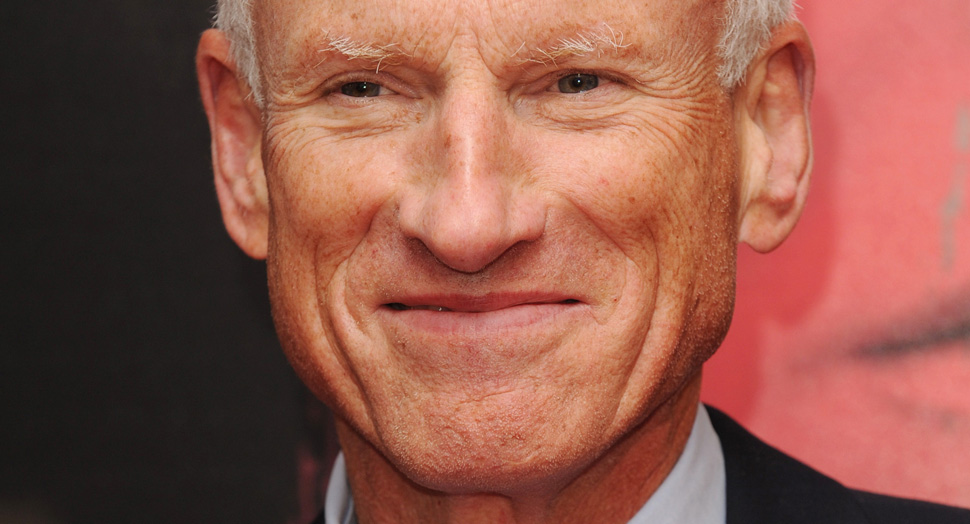
James Robert Rebhorn was born on Sept. 1, 1948, in Philadelphia, PA. His mother, Ardell Frances Rebhorn, nee Hoch, loved him very much and supported all his dreams. She taught him the value of good manners and courtesy, and that hospitality is no small thing. His father, James Harry Rebhorn, was no less devoted to him. From him, Jim learned that there is no excuse for poor craftsmanship. A job well done rarely takes more or less time than a job poorly done. They gave him his faith and wisely encouraged him to stay in touch with God.
 Samantha Rodman recommends these 11 questions as a way of engaging people in a positive conversation.

On the evening of my birthday, I attended our regular Threshold rehearsal but it was sparsely attended because it was so close to Christmas. About a week earlier, our leader, Kay, had decided it was time for me to graduate because of my successful singing at the bedsides of the dying. First, I sang to Kay and Robin, then they put me in the chair and sang “O Sister My Sister” to me along with Venus who had just arrived. I spoke a little about how the choir gives me an opportunity to be fully-present and to open my heart-space to the person to whom we are singing. Then, the famous Maria Culberson arrived (an important leader and song writer for Threshold) and we had a wonderful practice. At the end of the practice session, they sang several birthday songs for me. It was great. I felt really loved.

Mahogany Sideboard by Rene Almon Woodworks
 “If you only read one book about the brain this year, make it this one,” said Dr. Martin Rossman in his UCTV lecture on YouTube titled How Your Brain Can Turn Anxiety into Calmness. The lecture is so fascinating I have watched it several times — I find his rabbinical speaking style to be soothing and the science to be amazing. He says, “If we can teach the blind to see, we can teach the anxious to relax.” He recommended this book so strongly because, “it saved my marriage.” This from an M.D.!
Louanne Brizedine’s book is written in a very accessible style, even though she is an M.D. trained at Yale and on staff at UCSF. She starts with how, even before babies are born, testosterone kills off half the neurons that manage with emotional communication in the brain of the male fetus. Testosterone kills a huge percentage again at puberty (which is why teen boys don’t talk about feelings) and again later in life. She explains that we all have androgens, which she doesn’t like to call “male hormones” because, well, we all have them. They generate sex and aggression and diminish in both genders with age.
“Her book travels through the human lifespan describing predictable hormone changes and how they affect the brain and behavior. Perimenopause and menopause are explained in detail and strategies for coping are useful. I especially liked Dr. Brizendine’s riff on how society will change when we use this new knowledge.
Women are living in the midst of a revolution in consciousness about women’s biological reality that will transform human society…. The scientific facts behind how the female brain functions, perceives reality, responds to emotions, reads emotions in others, and nurtures and cares for others are women’s reality. Their needs for functioning at their full potential and using the innate talents of the female brain are becoming clear scientifically. Women have a biological imperative for insisting that a new social contract take them and their needs into account. Our future, and our children’s future, depends on it.”
Dr. Brizendine descries in detail how oxytocin drives our “tend and mend” behavior and when it subsides in menopause, it can free us to creative pursuits beyond the boundaries of our own families.
“If you decide to take hormone therapy, keep your blood pressure low, don’t smoke, get at least sixty minutes per week of increased-pulse cardio-vascular exercise, keep your cholesterol low, eat as many vegetables as you can, take vitamins, decrease your stress, and increase your social support.
“The hypothalamus controls our appetite. …they found that changes in a woman’s diet and physical activity, both of which may have to do with changes in her hypothalamus at menopause, are the cause of weight gain.”