Tag Archives: attachment

Prestige vs. Dominance

Prestige vs. Dominance

The Secret of Our Success: How Culture Is Driving Human Evolution, Domesticating Our Species, and Making Us Smarter was recommended by Nicky Case The Evolution of Trust which I referenced near the end of my review of Beth Macy’s book Paper Girl. I especially loved this book because it has a chapter title: Prestige, Dominance, and Menopause.
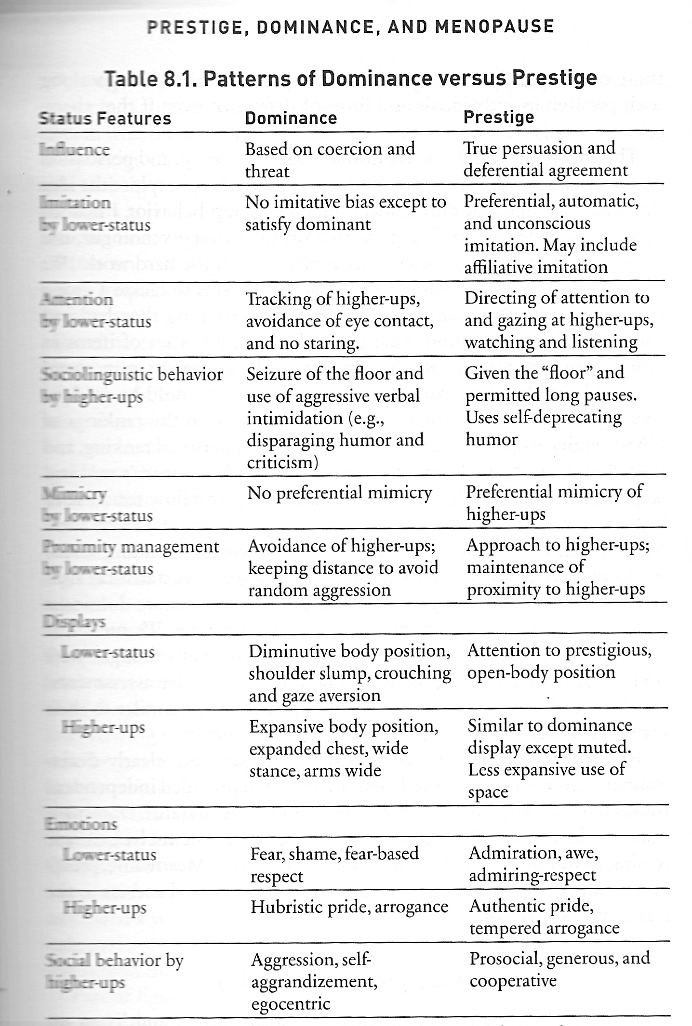
Chart Prestige vs. Dominance

On page 127 the author defines Hubristic pride, which he calls Dominance, as seeking high status by controlling others through force or threat of force. Dominators physically tend to stand upright, expand the body and broaden the chest and widely spread their limbs to take up a lot of space. They tend to lower their voices over the course of an interaction. Their subordinates try to “look small” by shrinking their bodies, casting their eyes down, crouching their posture, and minimizing their presence to avoid random acts of aggression. Submissive displays are associated with the emotion of shame.

In contrast, Prestige is associated with the authentic pride that goes with seeking high status by gaining the admiration of others through one’s competence, skill, success, or know-how in valued domains. Leaders tend to tilt their heads up, have an open-body posture and smile. Lower-status individuals tend to gather around and to defer. Their emotions are admiration, awe, and respect that is not based on fear.

The menopause part of chapter 8 refers to elephants where the old matriarchs remember where the distant water holes are, and killer whale grandmothers who teach adolescent orcas how to beach themselves to gulp down seal pups, then how get back into the water. He suggests humans no longer respect the elderly because old humans become quickly obsolete due to rapid technological advances. Your grandmother can’t help you write a good profile for a dating app or counsel you on crypto investments.

Henrich tracks the evolution of genetics and biology are weaves examples of cultural evolution to demonstrate how language and sociality launched our species on an extraordinary evolutionary trajectory. Several parts stood out for me. On page 188 he describes how, in a small society, one’s reputation provides a shield that protects them from harm or exploitation by others. Repeatedly violating social norms creates an opening for the violator to be exploited with relative impunity. I see this happening with my disabled veteran brother who is wheelchair-bound and living in relative isolation in Virginia. Because he is so difficult socially, he becomes a target for social predators.

Henrich describes shame in a social environment on page 198 as “Shame emerges when someone violates a social norm or delivers a substandard performance.” Violators or social norms display shame to communicate their acceptance of the local social order. It is saying, “Yes, I know I violated a norm and should be admonished for it, but please don’t be too harsh on me.” This would be the contracted posture described in the chart above.

Tasmania

Tasmania is roughly four-fifths the size of Ireland was once connected to Australia by a land bridge. The land bridge flooded about 12,000 years ago, creating the Bass Strait which separates Tasmania from what is now Melbourne, Victoria, Australia, by about 200 kilometers (about 120 miles). On page 220 Henrich describes the late 1700’s when the first Europeans arrived and they discovered a population of hunter-gatherers equipped with a simple toolkit of about 24 items. To hunt and fish, men used only a one-piece spear, rocks and throwing clubs. They had leaky rafts but no paddles. To ford a river, the women would push the raft across, towing their husbands and children. They did not catch or eat fish, and they drank from skulls.

Across the Bass Strait, Australian Aborigines possessed hundreds of additional specialized bone tools, boomerangs, nets for birds, fish, wallabies, sewn-bark canoes with paddles and wooden drinking bowls. Joseph Henrich theorized that the loss of rich social connections led to the shrinking of the Tasmanian’s collective brain. I found this fascinating in the context of the Talbots of Ireland who were granted the lands and harbour of Malahide in 1184 for services to King Henry II of England. The Talbots added to their holdings in 1821 when they acquired 3000 acres in Tasmania where they started a sheep station that they also named Malahide.
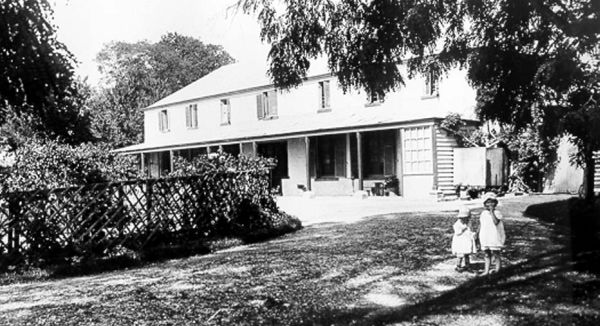
Malahide, Fingal Tasmania in 1899

The Tasmanian National Trust website “Unshackled” reports that 75,000 convicts were transported from Dublin’s Kilmainham Gaol to Tasmania between 1803 and 1853. In the year 1821, the same year the Talbots acquired the 3000 acres, the Hobart Prison Barracks were constructed in Tasmania to house the arriving convicts under sentence. “After 1821, all male convicts were processed at the Hobart Prison Barracks before being assigned labour roles across the island.”

Deb Turns 70

Deb Turns 70

I worked for weeks to spruce up the house and the garden to host a Saturday lunchtime party to celebrate Deb’s 70th birthday, which also marked her retirement announcement. We invited all the boating regulars and several of Deb’s friends from the YMCA and her neighborhood. I hung the Market Canopy from India for a festive touch. Dahlias graced the wooden flower bins front and back. I polished up the front garden and planted kale and marigolds in the raised beds on the side. Potted some bright calendula. Put a red serape on a folding table.


I was pleased that everyone brought something to share. Lots of sweets from Deb’s girlfriends. One brought a fabulous salad with homemade vinaigrette that was gobbled up in a jiffy. Brent brought a beautiful veggie platter.


The big thrill was the chocolate cake that Wayne made, and the chicken Parmesan that Justin (background) made. I cooked up some Trader Joe’s Lasagna that was popular.


Lori, Brent and Liam join Deb’s Friends

What I learned: No one sat in the living room, or at the kitchen table, or at the dining room table (which was unexpectedly covered with gift food), or on the teak settee in the back yard. The men sat at the little table covered with the serape. The plastic tablecloth clashed visually with the red Market Canopy. Justin’s dish required a knife and fork which was tricky on paper plates with plastic cutlery — chicken cut into bite-sized squares would have been easier. I should have used real plates because I had 11 guests. I used real forks for the cake.

No one asked for coffee. No one drank my beverages, they all brought their own, as requested. No one ate my sliced porcini or Mt. Tam cheese or sopresatta. It went 12 noon to 3pm.

Los Olivos and High School Friends

Los Olivos and High School Friends

Left home at 4:30 on a Wednesday morning to bypass SF and San Jose rush hour traffic on my way south on 101 to Los Olivos, just beyond Santa Maria. Highway 101 is so much easier on my 1994 Volvo than Highway 5 (in gray) because on the travel speed is a temperate 65, not the 85 mph demanded on the 5.

As I approached Salinas, daylight was just cresting above the Gabilan mountains to the east, a silver ribbon outlining the gray ridge, then trimmed by overhead rows of gray clouds of varying stripes. The Coastal mountains on the right grew brighter as the sun rose and I pulled into Salinas to enjoy breakfast at Dudley’s.

Salinas at Daybreak

After breakfast I walked around for a few blocks and admired the creativity of the Hallowe’en decorations in a downtown alley.

At 10 am there was no one in my lane for as far and the eye could see, forward or backward. The drive was beautiful and meditative, and around noon I stopped in Santa Margarita, high in the mountains and still shrouded in fog, even though it is just 10 miles straight uphill from San Luis Obispo. At about 3 pm I met up with my friends at the VRBO in Los Olivos and we visited some of the shops and wine tasting rooms.

Rocking my Moroccan Bag in Downtown Los Olivos Which is Three Blocks Long

I cooked up a quiche for our first night, and on our second and final night we visited restaurant Bar le Côté.

At Bar Le Côté: Regina, Jane, and Moi

Shopping at Garden Supply in Los Olivos

We hadn’t seen each other in ten years, since the 50th high school reunion that we organized. It was such a pleasure to catch up and to fill in the blanks about how we got to where we were. They spoke about what they felt when they visited my house when we were in high school.

Jane: your mother seemed like a child.

Regina: your father was handsome but very scary. Manipulative.

It was such a relief to feel seen and understood. Because I departed at 10 am, the Friday afternoon trip took seven and a half hours but I enjoyed digesting all the insights and camaraderie.

Great trip.

Tv Show “Bad Sisters”

Tv Show “Bad Sisters”

I subscribed to AppleTV+ to watch the new season of “Morning Show” and the premiere of “Lessons in Chemistry,” but the big find was “Bad Sisters,” originally titled “Emerald.” Brilliant writing, bang-on characterization of four Dublin sisters trying to help the fifth sister who is trapped in an emotionally-abusive marriage. And it’s funny!

Bad Girls Cast

Bibi, Grace, Eva, Ursula, Becka

It won a 2022 Peabody award and four nominations for Primetime Emmys and I am thrilled to learn that it has been renewed for a second season. Set in Dublin and shot on location in Ireland, it is based on the Flemish series “Clan” and was developed by Sharon Horgan who plays Eva, the eldest. Deeply Irish in the way it deals with the bad husband, it never considers divorce or trying therapy to get the physically-enormous-but emotionally-stunted man to grow up. The photo reflects that there is wine in nearly every shot as they are harried by an insurance firm run by two brothers who are secretly in deep financial trouble. It moves at a brisk pace and I loved that I could not figure out how it was going to end until we got there. Very satisfying.

Birthday 2022

Birthday 2022

Kiraku Cake Delivered by Robot – Photo by Joyce

My birthday fell on a Saturday this year, so I thought I would celebrate by inviting the Saturday Saunterers to my home for cookies and coffee. I wrote to our leader, who (unknown to me) was finalizing plans for a December visit to Germany, so he simultaneously announced his absence for a few weeks and my offer to lead a creek hike on the 17th. I sent out a detailed map so folks could find the starting place — our normal starting place for this hike.

Notice Both Map and Field Instructions

I asked one of the hikers who comes every week to assist me — to lead a short section so that I could dash home and heat the coffee. She showed up at the start but did not even cross Fulton to start the hike. She took off by herself in a different direction and one of the hikers sprinted after her, and learned that she preferred to meet the rest of us at my house. So I had no help and the rest of the group arrived to wet chairs and cold coffee.

The rest of us being three people.

Wende, Marsha, Laura. Marsha’s husband Dave was also there

They sang happy birthday to me. I spent about $100 on food and flowers, which I gave away to my neighbors that afternoon before boarding a plane to Florida to help out my sister Mary Rose, at her request, dog-sit for her friends who were going on a cruise together.

[Note:] This is the map our leader sent a few weeks later for a hike (in the rain) that he led. His turnout was not much better.

Celebrating Quiddity

Celebrating Quiddity

The dog in this NYTimes article by Alexandria Horowitz is named Quiddity by his two lexicographer “parents” (they don’t say owner). Quiddity is a “mid-sized mixed-breed dog with a sleek black coat, a scruffy schnauzer-like face and Brezhnev-esque eyebrows that gave her the appearance of a wise old man.”

Bringing Home Some ‘Hairy Joie de Vivre,’ and Taking Notes

Like many, the canine behavioral expert Alexandra Horowitz adopted a dog during the pandemic. She had extra incentive: understanding a puppy’s development. Now, she’s turned her observations into a book.


Because Alexandra Horowitz, 53, knew the dog’s mother and saw the puppy on the day she was born, “her early life was not full of trauma, and yet nonetheless she was not the dog I hoped she would be at first. She wasn’t responsive to us in a way that I wanted her to be.” Quid was impulsive, eager to run heedlessly after squirrels and other elusive creatures, inclined to bark more relentlessly and with less apparent purpose than Horowitz’s two older dogs.

“I feel now that I was way too focused on dog behavior,” she said. “In the beginning, nothing would slip by me, and it was too much for a puppy to bear. Over time, as I began to release my vise grip on the idea that she should be someone other than who she was, I began to appreciate her for who she really is.”

Untrammeled Enthusiams

Alex’s lexographer husband said, “I think she’s fascinating and full of excitement and love and she has a hairy joie de vivre. She is untrammeled in her enthusiasms, which is nice. Nobody’s interested in a jaded dog. She is also kind of a pain in the tuchus because of those untrammeled enthusiasms.” I looked it up and enthusiasm can be countable or uncountable. Apparently, he can count her enthusiasms, which include squirrels, tennis balls and untrammeled barking.

Quiddity can be defined as the essence that makes something the kind of thing it is and makes it different from any other. Quid is latin for “what” so if your dog was named Fred you would love his “fredness.”

I think Quiddity is what Dr.Rita Levi-Montalcini had in mind when she urged the Praise of Imperfection.

Irene Lyon: Who Heals?

Irene Lyon: Who Heals?

Irene Lyon says that, ideally, we develop a sense of safety and belonging within our bones, guts, and cells as our attuned caregivers encourage us to feel self-worth and personal agency over the pivotal first three years of our lives. Because we are too young to think and reason, our learning is stored into our body posture and the muscles that move us, the muscles that give us strength and a felt-sense of confidence to take on the world.

Father son attunement

Photo taken by Mother

The sensation that we are worthy of the effort it takes to get what we want comes up from our gut which sends more signals to the brain than the brain does down to the gut. As we grow up, we become conscious of our thoughts which get laser-beamed down to the gut, reinforcing the feeling that we can cope with the challenges of our life.

Vagus Nerve

Afferent Signals Arrive in the Brain

Calm is not the same as Regulated – PVI Oct. 2023

The energy that forms how we sense our gut and organ systems (what we call our Sixth Sense) defines our sensations of ourselves as physical, emotional, mental, relational and creative beings. When we are unable to connect to ourselves, to others and our to environment, this shut-down behavior is often described as PTSD. How did this connection get faulty?

For some of us, it goes back for generations, including how our parents were raised and how they mirrored this behavior in our early years. Where large broods are the norm and poverty is widespread, babies were often seen as “yet another mouth to feed” rather than an opportunity to build something wonderful for the next generation. Beating children and chronic shaming practices that use disconnection (get out of the car, now!) and humiliation as a way to control a child’s behavior creates a high level of toxic stress and biological shame that becomes infused into the ENTIRE organism of the young child. In very young children, these feelings are learned as body sensations, which can’t be rationalized later as words or stories. These bad feelings must be addressed where they are: in the body and nervous system.

Those of us who experienced this kind of toxic shaming in infancy and childhood don’t know what it means to feel safe and relaxed in our bones, gut, and cells. We have learned to always be on guard and to express something along the lines of

“all connection is bad and everyone is to be suspected as dangerous and a threat.”

The chronic betrayal by parents and primary caregivers, from which an infant or toddler cannot escape, can instill a quality of hopelessness and defeat such that the person, as an adult, will feel they are in fact bad meat. This underlies self-harm and addictions. The internalized belief that they don’t deserve to be treated well (as the adult may have screamed while the beating the child) leads them to risky situations and abusive relationships. The pervading sense that they are not valued, or even wanted, can lead to a constant cycle of resistance to doing the work, fleeing from healthy behaviors, and rejecting the care of healers and supportive situations. See Irene Lyon‘s blogpost on why every trauma survivor CAN heal, but not everyone will.

For those of us who had mothers who were not capable of soothing us, we lived our early lives ping-ponging between hypervigilant and freeze response. We must learn what it feels like to be biologically calm and to cultivate an internal sense of safety and connectedness. So much restoration work is required, including realizing that maybe the mother herself never felt safe or calm. Coming to accept that my mother could not soothe me, even though I was capable of being soothed by my godmother, allowed me to forgive both my mother and myself. I see now that maybe I am good seed that fell upon rocky ground.

Oprah says, “Feeling that you deserve something is not the same thing as feeling worthy.” And simply feeling deserving and worthy doesn’t mean there isn’t a Competing Commitment such as “if I become biologically calm, I won’t be on the same wavelength as my family and they will reject me because they believe that I must be like them to be liked by them.” If someone has a (maybe unconscious) belief that getting well would betray their connection to their (birth) family, they might get trapped on the hamster wheel of spiritual seeking. See this Harvard Business Review article titled The Real Reason People Won’t Change.

Update Dec 2021

NYTimes Opinion “Opioids Feel Like Love”

The connections between brain opioids and motherly love were first explored by the neuroscientist Jaak Panksepp decades ago. Dr. Panksepp, who died in 2017, told me that when he first tried to publish data connecting brain opioids to attachment, he was rebuffed by a top medical journal. His research showed that morphine, in doses so low that it didn’t cause sleepiness, eased separation cries made by baby animals in multiple species.

The idea that the purest, most innocent love — between parent and child — could have any commonalities with the degradation of heroin addiction was “too hot to handle,” Dr. Panksepp told me. Today, however, decades after he published his work in another journal, what is now known as the “brain opioid theory of social attachment” is widely accepted.

When people nurture children or fall in love, hormones like oxytocin are released, infusing memories of being together with endorphin-mediated feelings of calm, contentment and satisfaction. This is one way that social contact relieves stress, making bonding a fundamental protector of both mental and physical health. When we are far from our loved ones or sense that our relationships are threatened, we feel an anxiety that is not unlike withdrawal from drugs.

So if “all connection is bad and everyone is to be suspected as dangerous and a threat,” the endorphins and oxytocin are not endogenously generated. Attachment does not become pleasurable or soothing. Spending time with others does not produce “calm, contentment and satisfaction.” No wonder Maia Szalavitz says “Addiction is A Learning Disorder.”

Update October 2023

BOTSA PDF link updated Brain Opioid Theory of Attachment. The endogenous opioid system plays a central role in sociality in primates, including humans. Conclusion:

We conclude that there is significant evidence for a role for the endorphin system in a range of mammalian bonding behaviours, including separation distress, play, gregariousness, grooming, infant attachment behaviours, positive affect and affiliative behaviours.

It goes on to say that emotional pain is reduced not only by endogenous opioids but also by oxyctocin, so maybe a caring kiss really does soften the pain. Reducing emotional pain using opioids, endogenous or not, flattens all emotions, not just the painful ones.

Anterior Cingulate CortexEndogenous opiods ties in with pain management using self-hypnosis according to David Spiegel, MD, Associate Chair of Psychiatry & Behavioral Sciences at Stanford University and founder of Reveri self-hypnosis app. At about 40 minutes in to this podcast, he suggests that pain can be managed when self-hypnosis activates endogenous opioids in the dorsal portion of the anterior cingulate cortex (midline “default mode network” emotional regulation).

If you say, “Your hand’s in ice water, cold, tingling, and numb,” [an MRI shows that] you turn down activity in the somatosensory cortex here. If you say, “Well, the pain’s there, but it won’t bother you,” which is sort of the way people on opioids sometimes feel, it was in a different part of the brain, the dorsal anterior cingulate, which is a part of the brain that we’ve shown turns down activity when you go into hypnosis, so we understand how the brain is doing it.

Jan Winhall said, on October 5, 2023 in a PESI seminar, that trauma survivors can work to remove danger from their surroundings but that the numbing behavior, which was an adaptive coping strategy, sometimes continues and interferes with connection with the self and with others. She recommends shifting away from a pathologizing model of these adaptive behaviors and, when safe, to “turn down the dial” on endogenous opioid production so the person can titrate the willingness to tolerate emotional pain and “revivify” emotional attachment.

Trauma: Inherited, Denied, Healed

Trauma: Inherited, Denied, Healed

Elizabeth Rossner writes about the legacy of trauma and the labyrinth of memory in this wide-ranging review of her visits to Auschwitz with her father who came through the camps (she has a chapter on why she does not use the word “survivor” here). She also explores the legacy of trauma for the survivors and their children who experienced the killing fields of Cambodia, the retreat from Hanoi, and the massacre in Rwanda.

Traumatized people don’t feel safe, and parents who feel unsafe create households without a feeling safety, raising children do who not feel safe. The traumatized parents express the unresolved trauma in two main ways:
1. Suppressing all emotion in an effort to suppress the unrelenting, wordless fear trapped in the body. Children can’t play with someone who is numb. Children can’t bond well with someone who is numb. Drugs and alcohol often strengthen the numbness and emotional unavailability.
2. Traumatic rage squirting out uncontrollably in overreactions to upsetting everyday events. Children never know when the traumatized parent is going to beat them for a trivial infraction, or embrace them with understanding. The parent is inconsistent, and blind to the inconsistency.

Rossner quotes Dr. Maria Angeles Morcuenda, “The children of people with unresolved trauma have not learned [yet] to feel safe [even when they are] in a safe environment.”


Esther Perel says “home is the place where you feel safe, seen, appreciated, respected, and wanted.” When trauma in the home is denied, such as physical abuse, emotional abuse (betrayal and the like), or sexual abuse, the dependent child may resort to denial in order to preserve the attachment on the damaged parent upon whom she or she relies.

“Trauma denial is an act of self-preservation,” says Perel. “We employ self-delusion when too much is at stake and we have too much to lose. The mind needs coherence, so it disposes of the inconsistencies (lies) that threaten the structure of our lives. This becomes more pronounced when we are betrayed by those we feel closest to.”

Elizabeth Rossner says, “I hope my book invites readers to consider their own relationship to intergenerational transmutations of grief, trauma and resilience.” In her conversations with Dr. Morcuenda, we learn that healing from trauma is all about getting to feel safe. Dr. Morcuenda’s work focuses on “How do we make this baby, this child, resilient to the inevitable trauma life is going to bring? The work is to give each child what he or she needs, and to recognize what interferes with their ability to do that.”

Healing is seen when the trauma survivor can become fully present in the moment. Resilience can develop when we can interact fully in the moment without numbing out or slipping into the past.