A few days ago, Linda Loveland Reid gave a wonderful talk on Rauschenberg and Jasper Johns as a fundraiser for the Sebastopol Center for the arts. As I though about Abstract Expressionism and its impact on artists, I sent this Email to Linda.
I have been thinking about what you said about Abstract Expressionism. I remember Judy Chicago’s rage at being excluded from prestige museums despite producing art that seemed to be exactly what they defined. The ones we saw at the DeYoung show were “perfect.”
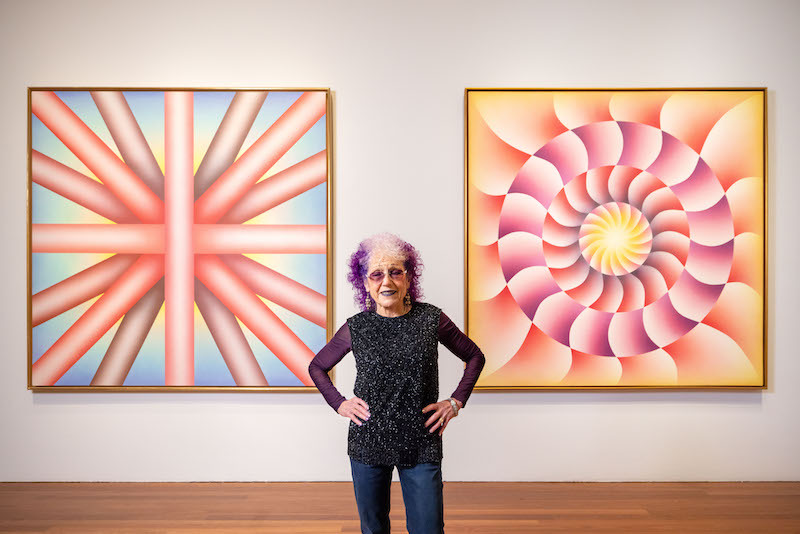
I think the art establishment used the stringent intellectual shibboleths as a way to exclude people they didn’t like — clangorous Judy Chicago, for example, or not-straight white males like Rauschenberg and Jasper Johns. The Art Establishment clinging to their elite status was like trying to hold a wolf by the ears.
Their forceful superiority got knocked down so far that the neo-Dadaists were supplanted by Pop artists. And yet two prime examples of tall, slim, elegant, educated, congenial, social male artists are Diebenkorn and Jeff Koons. I never could figure out why Koons got away with the stuff he peddled until I saw him speak on a panel at the Getty Museum in Malibu as part of their “Plato” show. The Getty was actually displaying his “Play-Doh” as part of the exhibition ancient Greek and Roman art as a play-on-words. The room-size sculpture is made of enameled aluminum, and yet somehow it seemed to smell like the children’s toy.
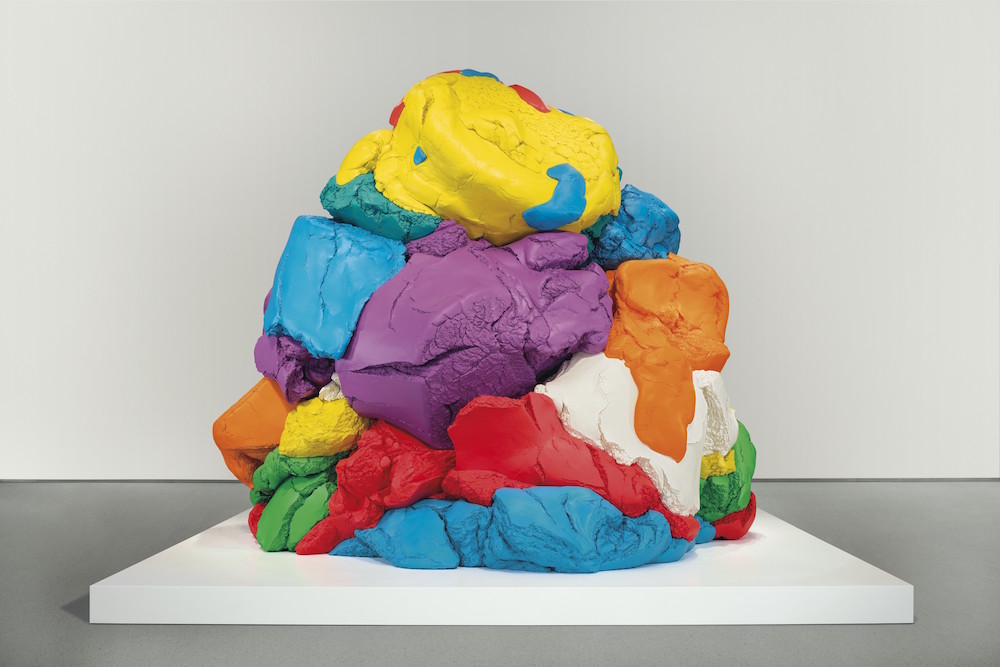
When elegant, refined Koons spoke, I could see why the new-money in L.A. swooned over him. It really felt, to me, like “The Emperor’s New Clothes.”
Koons’s work made me long for abstract expressionism in all its christian-white-male-chauvinist glory.
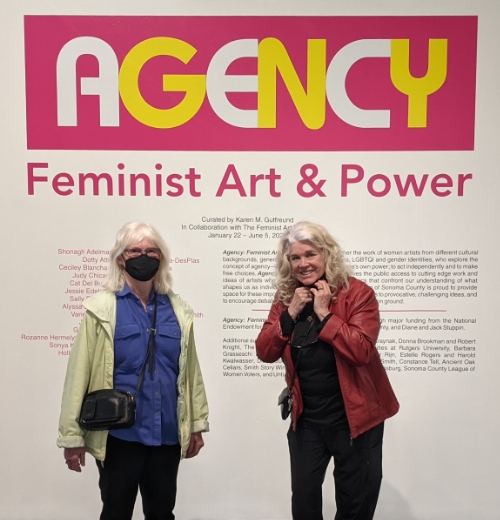
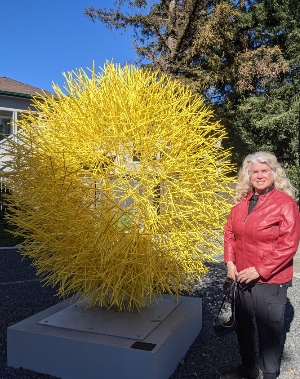 Linda treated me to a visit to the Sonoma County Art Museum to see the feminist art exhibit. It was great and had much more READING than I expected. My favorite was the video of balloons pinned to a wall, each with a different positive personal attribute including “sexy” and “cute.” Eventually, all the unnecessary attributes were exploded except the only ones that count in a patriarchal, narcissistic, addicted world. It was funny.
