http://worldobserveronline.com/2012/04/25/15-things-you-should-give-up-to-be-happy/
Jun3

Anet, Dan, Mary, Diane, Bernice
 We learned a tremendous amount from our boss, clinical supervisor Vicki Wedegaertner, and the SPC Program Manger, Melissa Fike. Their knowledge and compassion set a very high standard and an inspiring model to emulate. Topics included communication, building resilience, stress, depression, anxiety, burn-out, legal reporting requirement for elder abuse, county resources, and more.
The five of us had a great time, laughed a lot and learned a lot. I am so impressed by the caliber of the veteran Senior Peer Counselors who contribute their time and experience to help other seniors. I am confident that the new graduates will do our utmost to contribute effectively to the community.
Meditation invites us to release internal conditioned patterns of emotion, belief and localized identification so that our attention is free to abide ever more frequently in simply being. Being is the portal that supports the blossoming of our innate open heartedness, compassion, love and connectedness to ourselves, and the world around us. Living as being opens us to wonder, delight and astonishment, revealing how we are the Mystery, incarnate.
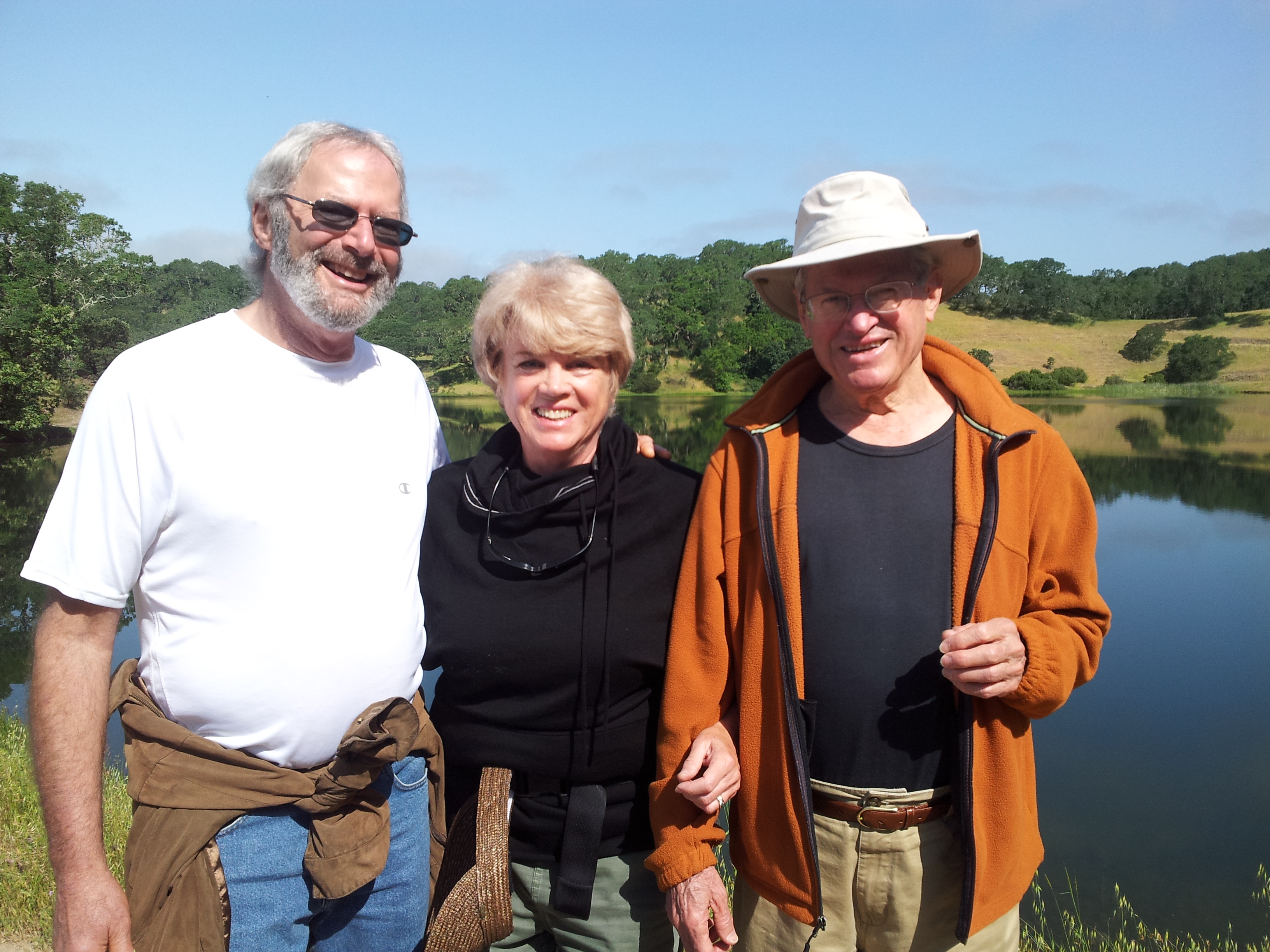 Hiking with Jason and Bob Martin near the Developmental Center in Glen Ellen, CA.
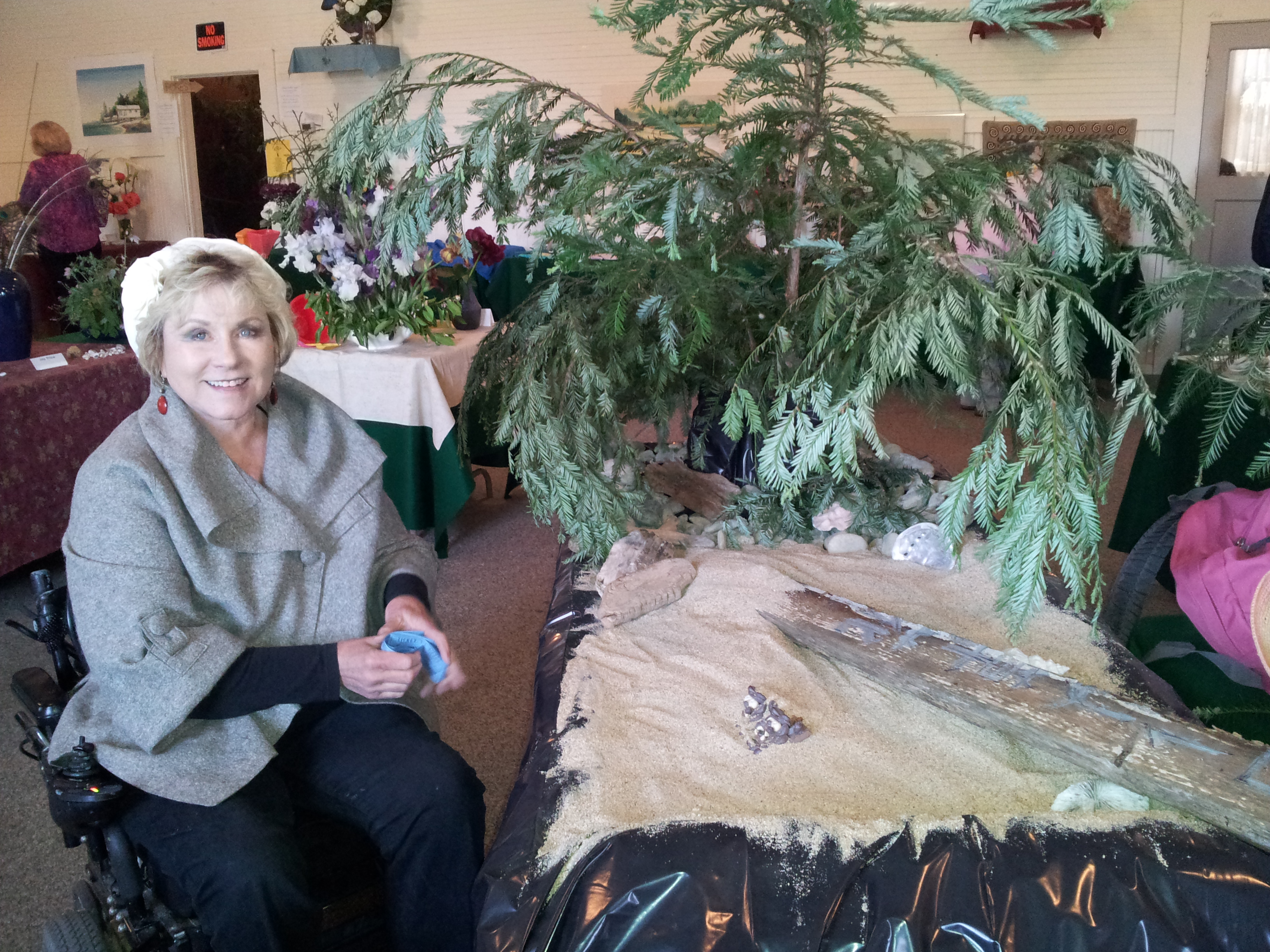 The theme was “From the Redwoods to the Sea” and artist HolLynn D’Lil created this arrangement with a redwood seedling by the sea with a piece of driftwood from the Japan earthquake and tsunami. The driftwood is inscribed with the Japanese letters symbolizing “Look out! It’s gonna blow!”
 Enjoyed a great oyster barbeque by Jill Butler and her husband Jim Wilson as a thank you to the WIMP team that created a web page for Sonoma County Forest Conservation Working Group. Teammates Jake Spurlock and Ben Grace brought their families and I made friends with Jake’s three-and-a-half year old Hailey (center). Her brother Rushton is in the green shirt (green is his favorite color) and Ben’s son James is in red. I put them in the garden cart and dragged it over the gophers holes to give them a bumpy ride. So much fun!
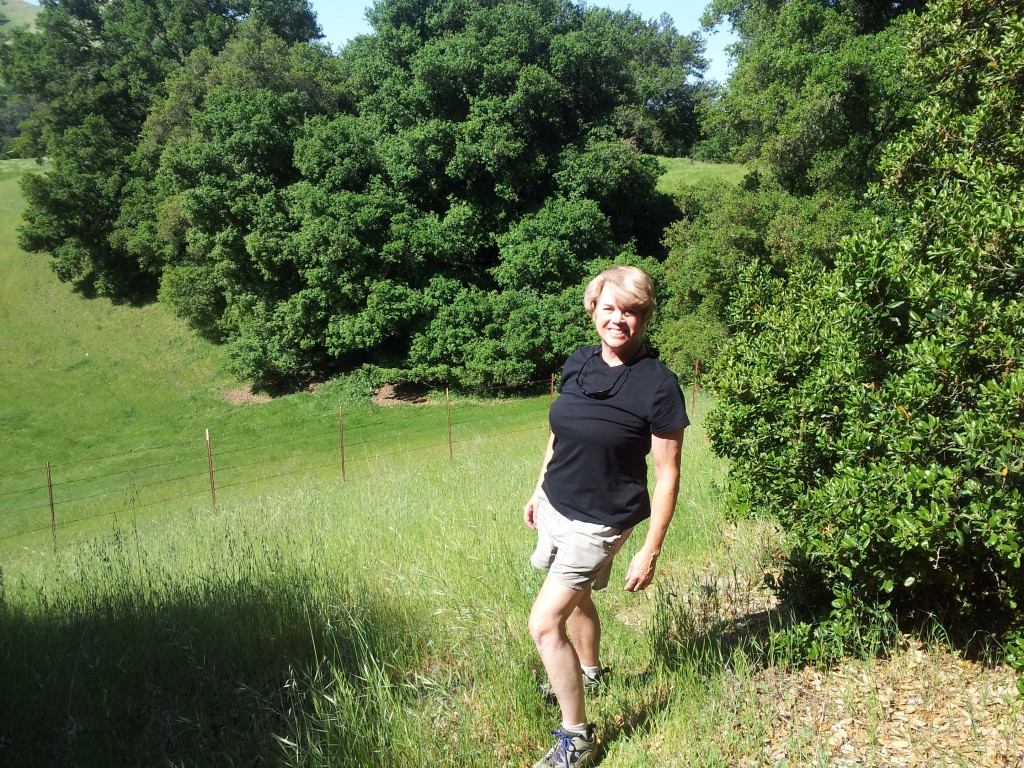 Great hike with Bob Martin’s Saturday Saunters. Started off hiking the model of the planets at Ferguson Observatory and we got to Neptune. Learned that Saturn is MUCH farther away than I thought. Had a great talk with Jill about childcare, bridge, and the meaning of retirement.
 It was a beautiful Sunday and the lupine spread like a blue carpet on the verdant Foothill Regional Park. Even Howard enjoyed it!

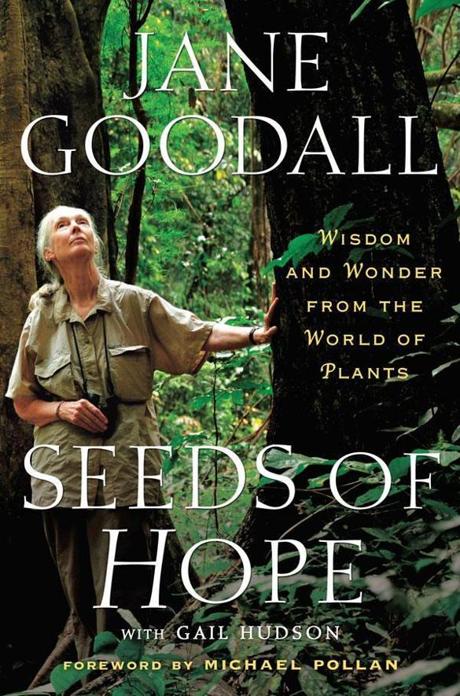 I had a wild day on Saturday, April 6. Starting at 8:30 a.m., I worked with a team to build a website in a day, and at 8 o’clock I screams over to Santa Rosa High School to see Jane Goodall.
Nearly every seat in the 900-seat auditorium was filled. I went up to the balcony and found a single in the middle of row in the center. It wasn’t until I was seated that I realized that if I had a panic attack I would really have to climb over a lot of people. I used the Panic Away technique to stay put until Dr. Goodall came out.
The applause was thunderous. She was in Santa Rosa on her book tour without a book. The publication has been postponed but the local bookstore filled the auditorium. In Santa Rosa, we read.
The Jane Goodall lecture was great. She spoke about her childhood in England and how she came study chimpanzees. It was clear that her mother was supportive of her curiosity her whole life, and even “packed up and moved to Kenya” because the authorities would not allow Jane out in the bush on her first assignment without a companion. So her mother went with her.
 Jane said, “that was back before no-see-um mesh was invented. If we opened the flaps of the army surplus tent to let in some air, we also let in snakes, scorpions and spiders.”
She mentioned that she had turned 79 a few days before and at the end of her lecture, all 900 of us sang Happy Birthday to her. Best live lecture I’ve seen since I saw Stephen Hawking speak at CalTech. His first words were, “Can you hear me?” and 900 scientists breathed, “Yes.”
Here’s my funky cellphone shot.
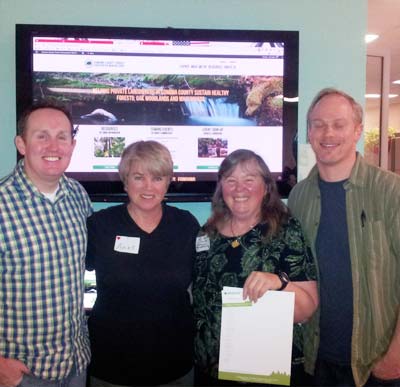 Flanked by teammates Jake Spurlock and Ben Grace, with client Jill Butler from Sonoma County Forest conservation Working Group, our prize-winning website-in-a-day. Ben designed it, along with custom redesign of their logo and letterhead (held by client) and Jake programmed it using WordPress and Bootstrap.