Tag Archives: compassion

Book: Playing Pygmalion

Book: Playing Pygmalion

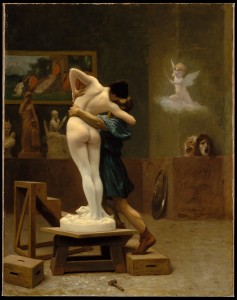
galateaBarbara Hayes lent me her copy of Playing Pygmalion: How People Create One Another by Ruthellen Josselson. I finally finished it the weekend I went camping by myself.  It was hard to read because the writing was terrible (see excerpt below) and because the copy I had was heavily marked up in black pen with underlines, circles and stars by the previous owner of the book, not by Barbara.  This excerpt from page 137 is footnoted (12) which indicates that this theory is also found in Dicks (1962) Scharff (1991) and Sander (2004).

People are bonded through their mutual creations, each carrying a part of the other that the other either can’t recognize (in terms of positive aspects) or can’t bear (negative ones) in the self.

To me, this meant that I could consider taking back the parts of myself that I have been projecting onto another. For example, I used to believe that I could not go camping by myself. That is was unsafe and that if anything went wrong, I would be blamed for it (“she was asking for it”). How interesting that I was camping by myself, successfully, when I finished the book.

The copy on the back cover was much better written. “Psychoanalytic theory offers a wealth of understanding of how people unconsciously create what they both need and dread. Too often, therapists join their patients in overlooking their own role in creating the relationship in their lives, such that it seems that the patients were simply unfortunate to “have” an ungiving mother or to “find” an unloving spouse.” [image: Pygmalion and Galatea by Jean-Léon Gérôme (French, Vésoul 1824–1904 Paris) Metropolitan Museum of Art, used with permission]

Eleven Questions For Happy Conversations

Eleven Questions For Happy Conversations

happy_oldSamantha Rodman recommends these 11 questions as a way of engaging people in a positive conversation.

  1. What was your favorite part of today?
  2. What are you grateful for?
  3. What are you going to do about that?
  4. How did that make you feel?
  5. What do you think he/she feels?
  6. How can we look on the bright side?
  7. What part of that can we learn more about?
  8. What do you want to do on the weekend?
  9. What can we do to help/to make someone happy?
  10. What do you want to do outside today?
  11. When do you feel happiest?

On My Birthday, I Graduated

On My Birthday, I Graduated

thresholdLogo
On the evening of my birthday, I attended our regular Threshold rehearsal but it was sparsely attended because it was so close to Christmas. About a week earlier, our leader, Kay, had decided it was time for me to graduate because of my successful singing at the bedsides of the dying. First, I sang to Kay and Robin, then they put me in the chair and sang “O Sister My Sister” to me along with Venus who had just arrived. I spoke a little about how the choir gives me an opportunity to be fully-present and to open my heart-space to the person to whom we are singing. Then, the famous Maria Culberson arrived (an important leader and song writer for Threshold) and we had a wonderful practice. At the end of the practice session, they sang several birthday songs for me. It was great. I felt really loved.

I Adopted a Cat from the Shelter

I Adopted a Cat from the Shelter

Thor

Thor

This big orange tomcat had been on the prowl in Jenner for about 10 years, until Animal Control was asked to trap him. His bullying had become a nuisance and he was persona non grata in the commercial area he defended as his territory. They didn’t want him back.

So the County cleaned him up, neutered him, then put him up for adoption. The Veterinarian commented, “Sweet cat. Robust.” He is 15 lbs of muscle and orange fur. Strong and handsome with pale green eyes, the Shelter gave him a new name, “Thor.” A month went by and no one adopted him, so they made him Cat of the Week and put his picture in the newspaper so I got him free. Even better, they threw in a bag of cat food and a bag of litter.

Turns out, he would have been free to me even if I had adopted him last week, because he is older than 6 and I am older than 55, so “Silver Paws” picks up those adoption fees.

Good thing I got to the shelter when I did. I was filling in the paperwork when another woman arrived and asked for him by name. When they told her the situation, she glanced over at me and muttered, “I hope you have a yard.” And I do. Quite defensible for a big, strong cat. And a creek full of interesting things.

I will miss the birds, though. I have found that I can have a backyard full of birds or I can have a cat. But I can’t have both.

UPDATE [June 12] Well, I guess I will have birds. I returned “Thor” to the Pound yesterday, the last day of my Two Week Free Trial.

“He’s not a ‘Thor,'” I said. “He’s no good in bed, and he’s no good on the battlefield. He is not the robust, outdoor, take-all-comers cat as advertised. He was out one night and seriously lost the fight.”

Thor's eye was bitten and he lost the fight

Thor’s eye was bitten and he lost the fight

After just 10 days with the cat, I found myself crying in my car in frustration and guilt. I only got one good night’s sleep, the night he was out, and he came back with a bite to the eyelid that swelled up the next day and sent us to the vet on Saturday morning, costing me more than $200.

As an outdoor cat, he sucks. Creamsicle was an outdoor cat with no claws. Claude was an outdoor cat, and small. They both came to me while living outside. They both fought for territory, and lost, but I never had to take either to the vet for bite wounds.

As an indoor cat, he sucks. He won’t sleep at night. In bed, he kneads incessantly, usually on the softest, most sensitive human part he can find. If he finally curls up and starts to nap, and I drop off to sleep, he suddenly YELPS and thrashes to a different position. Then I drop off to sleep and YELP again. This goes on through the night until it is elimination time and he does every noisy thing he can think of to get me to let him outside.

Then he fills my bathroom and bedroom with the redolent smell of digested cat food. Usually at daybreak. I can’t really get back to sleep after that.

I had the vet test him for intestinal parasites and giardia thinking that maybe his guts were hurting, but he was clean.

We don’t have a scratching post because we thought he was going to be an outdoor cat so he is shredding my crappy furniture.

I will keep applying warm compresses to his wound to facilitate its healing, and brushing him every day, but I can’t face 5 years of litter box cleaning and cleaning fur off my clothes. He’s going back to the Pound in three days when he looks better. Maybe he will find a home where he fits better if I give him a new name and re-write the ad. I gave the Pound this copy.

Mr. Marmalade

He’s a lover, not a fighter and he is sweet as marmalade. Sixteen pounds of muscle and fur, this 10 year old was a tomcat when he came to us. Beautiful long hair orange tabby with mesmerizing sea green eyes, this handsome boy loves to snuggle all night.

He is a very healthy cat. He’s just nocturnal.

The vet said it was unlikely he had lived on the street for 10 years. He had no scars, no feline HIV, no leukemia. I noticed that he did not jump up on sinks or kitchen counters. This was someone’s pet.

I think he would be a great pet for someone who is a Night Owl. Someone with a terrace and some way for him to prowl a small territory. He really does like to go outside, and on the his last day with me I saw that he was indeed negotiating his turf in the neighborhood.

​Maybe he would have settled down if I gave him more time.​ I hope the new ad helps him finds the right place. The Pound says that they find homes for adoptable animals.
Threshold Choir Audition

Threshold Choir Audition

thresholdLogoLast night I auditioned for the Sonoma County Threshold Choir and by the end of the meeting I was invited to join. Three of the seven women had just returned from the International gathering of the choirs which was held in Santa Cruz. They had been singing for three days and were stoked! Ideas for songs to sing just tumbled out and they enthusiastically explored to make each song sound better.

The “what we do” page says the Threshold singers seek to bring ease and comfort to those at the threshold of living and dying. A calm and focused presence at the bedside, with gentle voices, simple songs, and sincere kindness, can be soothing and reassuring to clients, family, and caregivers alike.

They put a recliner in the center of the room and took turns being the “singee.” The bedside singers would come close and sing gently, usually with two-part harmony and often with three. No Ethel Mermans here, they all sang as if they were mostly listening. I have never before heard singing that was an unspoken dialog.

The feeling of kindness and sharing was open and palpable. The bond of the community was remarkable. They liked that I could blend with the soft and gentle sound and they were very welcoming. I am looking forward to going back.

What reduces stress best is not trying to make it go away

What reduces stress best is not trying to make it go away

Excerpt from an article by Cassandra Vieten on HuffingtonPost

Strangely, what reduces stress best is not trying to make it go away.   Instead, by attending to your breathing, your body sensations or a special word, you bring yourself momentarily into a very basic, nonjudgmental awareness.   Grounded in this place of awareness, you can allow things to be as they are, almost as though you were sitting in the eye of a hurricane.   The stress may still be there, swirling around, but for the moment you are sitting in awareness.

What I Learned in Oakmont

What I Learned in Oakmont

OakmontRoom613The venerable, 85 year old Senior Peer Counselor put it best, “These people are a gift.” I learned so much from the unmarried couple in their 70’s with whom I stayed in Oakmont for the past eight months.

  • I enjoyed being surrounded by beautiful objects and expensive books that I did not have to dust.
  • I learned what it felt like to be on the receiving end of verbal abuse.
  • I saw what “scab-picking” was.
  • In dismay, I watched the man flee into a financial fantasy to shield himself, emotionally, from the verbal abuse. For 10 years he had been sending money to a Nigerian “lawyer” in the hope of getting a bank in Abu Dhabi to lend him a million dollars to invest in real estate. Just before I left today, he told me the Nigerian lawyer had been jailed, which froze the man’s assets in Nigeria during November and December, and that he had fired the Nigerian. He continues to believe that his loan will fund “next week.”
  • I watched the hostess punish me by keeping the TV tuned to Fox News.
  • I learned that isolation is the enemy of mental health.
  • I saw that Learned Helplessness keeps people trapped in ruts of thin emotional survivorship. They mistake this for courage.
  • What takes real courage is climbing out of the helplessness that was learned when one was vulnerable, sharpening the tools that have been gained over the years, learning to trust yourself again, and doing what it takes to get out of the rut.
  • I learned why the work we do as Senior Peer Counselors is so important.
  • I learned that love is simultaneously fragile and indestructible.
  • I learned that a dog is a fountain of joy and unconditional love. I won’t be paraphrasing D.C Fontana anymore about “enslaving animals for the emotional gratification of humans.”

Their beautiful Golden Retriever suddenly became lame before Thanksgiving and had to be euthanized before Christmas. The house was not the same without her. The Feeling of Healing was gone. A grayness descended.

I left.

How to Stop Suffering

How to Stop Suffering

Like trees, our physical body is changing. It’s born, grows, stabilizes, declines, and will die. But what about ‘this,’ in which our awareness of these facts is arising? Various names have been designated as pointers to ‘this’ — concepts like God, Pure Awareness, the Unconditioned, Pure Being, or the Great Mystery.   These concepts are pointers to the ineffableness that comprises our unchanging essence.

Suffering arises when we refuse what’s changing.   It’s never the event that causes suffering, but our attachment, aversion, or feigned neutrality to it.   What’s astounding is to realize that suffering, attachment, aversion, and neutrality are changing movements within a vaster background of unchanging essence.   When we’re willing to shift attention from foreground to background, we realize ‘this’ that’s always present, but all to often ignored and forgotten.

So what happens when we relinquish attending to the ever-changing foreground movements of our body, senses, and mind -— to sensations, emotions, and thoughts -— and instead turn our attention to realizing ourselves as the unchanging, which has no defining characteristics,   is outside of time and space,   is never in need,   yet is one of the most vital inquires we can make during our lifetime.

Richard Miller, Ph.D
http://www.irest.us/

Happiness is a Skill and Can Be Learned

Happiness is a Skill and Can Be Learned

WeilMDOne of the Senior Peer Counselors recommended Spontaneous Happiness byAndrew Weil, M.D. because “neuroscientists have demonstrated that helping others activates the same centers i the brain involved in dopamine-mediated pleasure responses to food and sex. One study of more than 3,000 volunteers concluded that regular helpers are ten times more likely to be in good health than people who don’t volunteer.

Much of the book covered things I already knew: eat real food, mostly plants, not too much. Make sure you get plenty of Vitamin D, especially by having fun in the sunshine. Take fish oil, and go fishing. Play with your “animal companions” and spend time in nature. Meditate, don’t medicate (if possible).

Even though I took an 8 week course in Mindfulness Meditation and have listened to Jon Kabat-Zinn tapes till they were bald, I still struggled with what I was supposed to actually DO during meditation. Dr. Weil explained Mindfulness as “self regulation of attention.” Ah! Where your attention goes, your energy flows. I know that one.

He explained meditation as the “ability to maintain one’s experience in the present moment.” Oh, so Blank Mind isn’t the objective, just Beginner’s Mind. I know that one, too!

What was especially fascinating was how he used this to explain addiction. On page 140 he notes that early in his professional career, he studied drugs and addiction and became known as an expert in addiction medicine. He learned that options for the treatment of addiction are few.

Solving addiction at its root is hard because it demands restructuring the mind at its core, where we experience the distinction between conscious awareness and the objects of awareness, between the perceiving self and what is perceived.

This sounds a lot like “addiction is a spiritual disease.” But wait, there’s more. He continues

When people cannot stop reaching for the next snack chip or the next cigarette, it is as if the chips and cigarettes control attention and behavior. in reality, the mind gives its power and control to the objects of addictive behavior. Freedom from addiction comes with awareness of that process and the ability to experience the object as object, without projecting onto it any undue significance. This is the essence of the buddhist teaching that suffering comes from attachment, and to reduce our suffering, we must work to reduce attachment. Furthermore, Eastern psychology insists that thoughts are best experienced as objects of awareness, just like trees or birds in the world around us. We suffer emotional pain because we cannot stop attending to our thoughts, cannot stop seeing them as part of us and habitually giving them great significance. Yoga masters and buddhist teachers recommend a variety of methods to break our attachment to thoughts. Some are practices intended to shift the focus of attention to something else — to the breath, for example, or to images in the mind’s eye, or to sounds. Others aim to develop the power of attention and increase voluntary control of it or to promote awareness of the distinction between the self and thoughts.

He ways that meditation is a long-term solution to the core problel of confusing awareness wit the objects of awareness (including thoughts) and suffering as a result of attachment.

I have read several of Dr. Weil’s books and articles and watched him on TV. What I liked best about this book is when he talked about the dysthymia he suffered for many years, and role of rumination and isolation in the lives of writers. He talked about how he lived far out in the country, down rough roads that made it difficult to visit him, even with an invitation. He thought that keeping others far away protected them from his downcast moods.

In this book he reveals that in his late 60’s, he realized that the social isolation was not separate from his dysthymia and he “uprooted” himself from his long time home, sold his rural property and moved into Tucson. He went out to dinner much more often and invited others over frequently. His mood improved considerably. He noticed that the most searched term on his website was “depression” and resolved to write a book about it — or rather, about its opposite, Happiness.

Happiness is a Skill

He says that happiness is a skill and on page 66 he quotes Matthiew Ricard, a French Ph.D. in molecular genetics turned Buddhist monk

The mind is malleable. Our lives can be greatly transformed by even a minimal change in how we manage our thoughts and how we perceive and interpret the world. Happiness is a skill. It takes effort and time.

He summarized mind-oriented approaches to emotional well-being. Some key points and comments from me:

  • Understand that depressive rumination is a hallmark of depression and that thoughts are the major source of sadness, anxiety, and other negative emotions. Learn to “curate” your thoughts, as if one’s mind is a museum where we look at the same images over and over.)


  • CBT is the most time- and cost-effective form of psychotherapy for depression and anxiety.


  • Learn how to use mantras, chanting, mental imagery, and conscious breathing to break the grip of sadness, anxiety, stress or negative thinking.


  • Curate the sounds in your head with silence or music that makes you feel good, or the sounds of nature. Curate what you see. Limit TV and the Internet. Avoid needlessly distressing images like Fox News.


  • Make social interaction a priority. It is a powerful safeguard of emotional well-being. As prison wardens know, isolation is death.

I recommend this book.

Richard Miller – iRest

Richard Miller – iRest

Meditation invites us to release internal conditioned patterns of emotion, belief and localized identification so that our attention is free to abide ever more frequently in simply being. Being is the portal that supports the blossoming of our innate open heartedness, compassion, love and connectedness to ourselves, and the world around us. Living as being opens us to wonder, delight and astonishment, revealing how we are the Mystery, incarnate.