Category Archives: Books

You Are What You Tweet

You Are What You Tweet

Jamie Reuben Hosts Book Launch for 'The New Digital Age' By Eric Schmidt and Jared Cohen“The New Digital Age” by Eric Schmidt and Jared Cohen points out that, “by 2025, the majority of the world’s population will, in one generation, have gone from having no access to (uncensored) information to accessing all of the world’s information through a device that fits in the palm of the hand.”

Eric Schmidt is the Executive Chairman of Google and Jared Cohen is the Director of Google Ideas, coming from a State Department and Security background. They have so many interesting scenarios of how things could be in the future that on page 53, I came up with a Movie of the Weeks idea about a fearless war correspondent working secretly because the system is set up so that even his editor does not know his/her identity. She was recruited “Charlie’s Angels” style by the senior editors who recruit and vet correspondents.

The focus of the book is quite international and the policy implications fill the last half of the book. They end with this thought:

the virtual and physical civilizations will affect and shape each other; the balance they will strike will come to define our world. In our views, the multidimensional result, though not perfect, will be more egalitarian, more transparent and more interesting than we can even imagine.

Happiness is a Skill and Can Be Learned

Happiness is a Skill and Can Be Learned

WeilMDOne of the Senior Peer Counselors recommended Spontaneous Happiness byAndrew Weil, M.D. because “neuroscientists have demonstrated that helping others activates the same centers i the brain involved in dopamine-mediated pleasure responses to food and sex. One study of more than 3,000 volunteers concluded that regular helpers are ten times more likely to be in good health than people who don’t volunteer.

Much of the book covered things I already knew: eat real food, mostly plants, not too much. Make sure you get plenty of Vitamin D, especially by having fun in the sunshine. Take fish oil, and go fishing. Play with your “animal companions” and spend time in nature. Meditate, don’t medicate (if possible).

Even though I took an 8 week course in Mindfulness Meditation and have listened to Jon Kabat-Zinn tapes till they were bald, I still struggled with what I was supposed to actually DO during meditation. Dr. Weil explained Mindfulness as “self regulation of attention.” Ah! Where your attention goes, your energy flows. I know that one.

He explained meditation as the “ability to maintain one’s experience in the present moment.” Oh, so Blank Mind isn’t the objective, just Beginner’s Mind. I know that one, too!

What was especially fascinating was how he used this to explain addiction. On page 140 he notes that early in his professional career, he studied drugs and addiction and became known as an expert in addiction medicine. He learned that options for the treatment of addiction are few.

Solving addiction at its root is hard because it demands restructuring the mind at its core, where we experience the distinction between conscious awareness and the objects of awareness, between the perceiving self and what is perceived.

This sounds a lot like “addiction is a spiritual disease.” But wait, there’s more. He continues

When people cannot stop reaching for the next snack chip or the next cigarette, it is as if the chips and cigarettes control attention and behavior. in reality, the mind gives its power and control to the objects of addictive behavior. Freedom from addiction comes with awareness of that process and the ability to experience the object as object, without projecting onto it any undue significance. This is the essence of the buddhist teaching that suffering comes from attachment, and to reduce our suffering, we must work to reduce attachment. Furthermore, Eastern psychology insists that thoughts are best experienced as objects of awareness, just like trees or birds in the world around us. We suffer emotional pain because we cannot stop attending to our thoughts, cannot stop seeing them as part of us and habitually giving them great significance. Yoga masters and buddhist teachers recommend a variety of methods to break our attachment to thoughts. Some are practices intended to shift the focus of attention to something else — to the breath, for example, or to images in the mind’s eye, or to sounds. Others aim to develop the power of attention and increase voluntary control of it or to promote awareness of the distinction between the self and thoughts.

He ways that meditation is a long-term solution to the core problel of confusing awareness wit the objects of awareness (including thoughts) and suffering as a result of attachment.

I have read several of Dr. Weil’s books and articles and watched him on TV. What I liked best about this book is when he talked about the dysthymia he suffered for many years, and role of rumination and isolation in the lives of writers. He talked about how he lived far out in the country, down rough roads that made it difficult to visit him, even with an invitation. He thought that keeping others far away protected them from his downcast moods.

In this book he reveals that in his late 60’s, he realized that the social isolation was not separate from his dysthymia and he “uprooted” himself from his long time home, sold his rural property and moved into Tucson. He went out to dinner much more often and invited others over frequently. His mood improved considerably. He noticed that the most searched term on his website was “depression” and resolved to write a book about it — or rather, about its opposite, Happiness.

Happiness is a Skill

He says that happiness is a skill and on page 66 he quotes Matthiew Ricard, a French Ph.D. in molecular genetics turned Buddhist monk

The mind is malleable. Our lives can be greatly transformed by even a minimal change in how we manage our thoughts and how we perceive and interpret the world. Happiness is a skill. It takes effort and time.

He summarized mind-oriented approaches to emotional well-being. Some key points and comments from me:

  • Understand that depressive rumination is a hallmark of depression and that thoughts are the major source of sadness, anxiety, and other negative emotions. Learn to “curate” your thoughts, as if one’s mind is a museum where we look at the same images over and over.)


  • CBT is the most time- and cost-effective form of psychotherapy for depression and anxiety.


  • Learn how to use mantras, chanting, mental imagery, and conscious breathing to break the grip of sadness, anxiety, stress or negative thinking.


  • Curate the sounds in your head with silence or music that makes you feel good, or the sounds of nature. Curate what you see. Limit TV and the Internet. Avoid needlessly distressing images like Fox News.


  • Make social interaction a priority. It is a powerful safeguard of emotional well-being. As prison wardens know, isolation is death.

I recommend this book.

Sonia Sotomayor

Sonia Sotomayor

sonia-book190w
My sister Laura was born in San Juan, Puerto Rico when I was six years old. I was very happy going to school in San Juan, and I loved Puerto Rico. Laura told me to read this book about a Puerto Rican girl in New York City who rises to the Supreme Court of the United States through hard work, generosity, skill with people, and good luck.

The best chapters are at the end when she talks about how she distinguished herself, and the role diabetes type 1 played in her life. She connected deeply with people, and more than cared about what happened to them — she took action. But she was not a protestor. Even as a teenager, she believed in figuring out the problem and negotiating a solution that worked for all parties.

She was very good a recognizing opportunities and taking good advice when it was offered. This is how she got into Princeton on a full ride, much to the astonishment of others at her Catholic Bronx high school.

The book is written in simple sentences and small words, making it clear that she very clearly adjusts her speech to her audience. We get a glimpse of her legal writing and the complex sentence structure that reveals her prodigious mind.

In the back of the book, on page 255, she talks about the role of luck in her life. Her grandmother (Abuelita) played a pivotal role in her life, providing protection from her domineering mother and the providing unconditional love that would sustain her even after Abuelita’s death.

Sonia feels that, after her death, Abuelita’s protection increased, manifesting in

fortuitous interventions that would save my life in diabetic crises, to strange alignments of circumstances that have favored me unreasonably. Things that might easily have happened to me somehow did not; things that were not likely to happen for me somehow did. This seemed like luck with a purpose.

This made me think of Tich Nat Han’s devotion to his ancestors, and I started to wonder if our departed ancestors are part of the collective unconscious. Are they part of our unconscious desires that bubble up enexpectedly, sometimes wreaking havoc in our lives as we try to sort out unexpected needs?

Sonia doesn’t really talk about her friction with her mother until almost the end of the book, page 279. The chaos at home, and her mother’s over-protectiveness “drove her nuts.” She describes how her brother got her mother off her back by saying

Sonia’s never going to tell you anything, Mami, because you always overreact.

Sonia distinguished herself by seeing the gray area rather than taking a position and fighting for it. Evaluating each case individually. Watching people for the small “tells” that reveal unreliable statements. Relentless preparation so that the jury could reach the best answer.

A remarkable woman and a very interesting book. Recommended

Jane Goodall Visits Santa Rosa

Jane Goodall Visits Santa Rosa

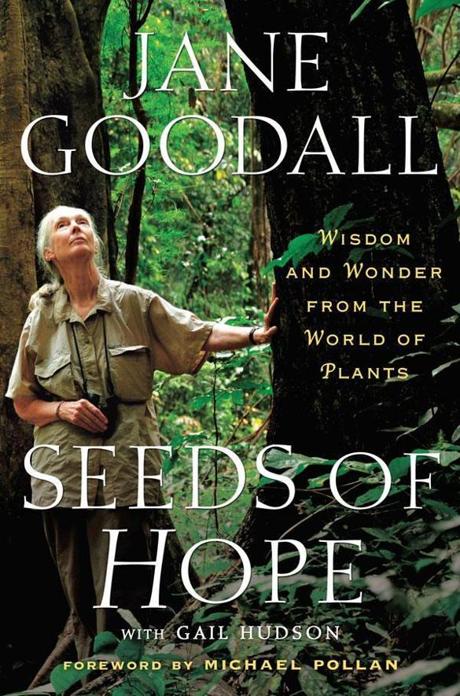
seeds-of-hope-jane-goodallI had a wild day on Saturday, April 6. Starting at 8:30 a.m., I worked with a team to build a website in a day, and at 8 o’clock I screams over to Santa Rosa High School to see Jane Goodall.
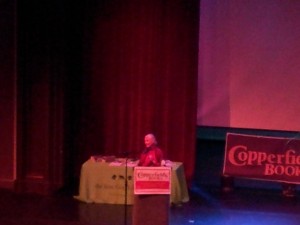
Nearly every seat in the 900-seat auditorium was filled. I went up to the balcony and found a single in the middle of row in the center. It wasn’t until I was seated that I realized that if I had a panic attack I would really have to climb over a lot of people. I used the Panic Away technique to stay put until Dr. Goodall came out.

The applause was thunderous. She was in Santa Rosa on her book tour without a book. The publication has been postponed but the local bookstore filled the auditorium. In Santa Rosa, we read.

The Jane Goodall lecture was great. She spoke about her childhood in England and how she came study chimpanzees. It was clear that her mother was supportive of her curiosity her whole life, and even “packed up and moved to Kenya” because the authorities would not allow Jane out in the bush on her first assignment without a companion. So her mother went with her.

JaneGoodallJane said, “that was back before no-see-um mesh was invented. If we opened the flaps of the army surplus tent to let in some air, we also let in snakes, scorpions and spiders.”
She mentioned that she had turned 79 a few days before and at the end of her lecture, all 900 of us sang Happy Birthday to her. Best live lecture I’ve seen since I saw Stephen Hawking speak at CalTech. His first words were, “Can you hear me?” and 900 scientists breathed, “Yes.”

Here’s my funky cellphone shot.

Zapped – Know Your Pollution

Zapped – Know Your Pollution

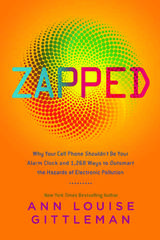
zapped-gittleman“Why your Cell Phone Shouldn’t Be Your Alarm Clock and 1,268 Ways to Outsmart the Hazards of Electronic Pollution” is the long subtitle of this book by Ann Louise Gittleman. Because my husband uses his old-fashioned cell phone (not a smart phone that constantly checks Email) as an alarm clock, I hoped this would persuade him to try something different but… no dice.
It prompted me to get a fabric catalog from LessEMF.com so I could make field-dampening pillow cases. (Haven’t done it yet.) You can also get meters to determine how much EMF you have or Stetzerizers to filter out the offending wavelengths (also called Graham-Stetzer filters).

Page 8 offers a chart of infrequences emitted by everyday things from microwaves to power lines.It goes on to explain

“Like everything else in our world, our bodies and every organ and tissue they contain have their own distinct frequency. The late Bruce Tainio… built the first frequency monitor in the world.. and determined that the average frequency of the human body during the daytime is 62-68 Hz. When the frequency drops to 58 Hz, cold and flu symptoms appear; at 55 Hz, disorders like candida take hold, at 52 Hz, Epstein-Barr, and at 42 Hz, cancer.”

The author talks about the work of Nobel Prize winner Gunter Blobel, M.D., Ph.D, who established that cell signaling includes frequencies (energetic signals) which are picked up by peptides. He also studied with Hazel Parcells, M.D., Ph.D. who taught Ms. Gittleman to think of each cell in the body as an electric battery broadcasting the pulsating rhythm of life. When you change the energy, you change how effectively the cells work.

Zapped directed me to AntennaSearch.com where I found these diagrams of the wireless towers near my house. I was relieved because it was so much less than the blasting RF I was exposed to when I worked in a TV station in San Francisco for seven years.

Antenna Search map results

Antenna Search map results

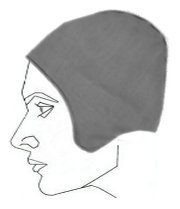
TinFoilHatMy favorite product, one purchased by a friend of mine when she realized how much wireless pollution she was exposed to, is her “tin foil hat.” She wears it most nights, taking a break from time to time because it seems to be so effective that it interferes with dreams. Described in the catalog as, “Stretchy Silver-coated nylon skull cap with ear flaps is lightweight and breathes nicely. Comfortable enough to wear year-round while sleeping, thin enough to be worn under a conventional hat or all on its own.” The perfect gift for someone who has everything.

Change the Habit, Don’t Break It

Change the Habit, Don’t Break It

cue
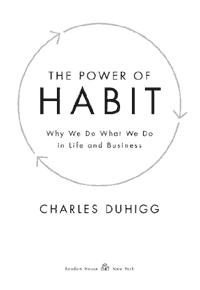
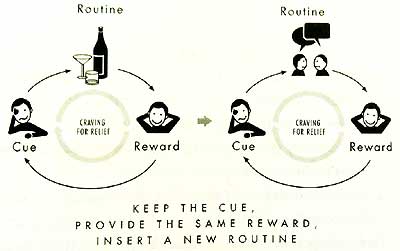
As The Brownies pointed out “as per Einstein, to keep doing the same thing and expect different results is insanity.” Charles Duhigg’s “The Power of Habit” shows us how to effectively change the routine to improve our self-mastery. “Change might not be fast and it isn’t always easy. But with time and effort, almost any habit can be reshaped,” he says.

habitSo much of what we do is automatic. We have to identify the habitual behavior and identify the cues that trigger actions. Eradicating a loop is unlikely. Your best bet is to change the routine you engage in when a cue kicks in.
The key to success is the reward. When your brain gets the cue, it’s going to execute the behavior to get the reward. That’s how brains work. That’s why salad diets don’t work. A salad isn’t a reward. Brains light up with grease, salt and sugar (including alcohol). Pizza and beer. No one says, “Come over for football and a salad.”

The best part of this book is the Appendix which breaks down the steps using an example from the Author’s life.

  • Identify the routine
  • Experiment with rewards
  • Isolate the cue
  • Have a plan

First, get mindful of your pattern. Then break it down into stimulus and response. What is the reward? Is it really a desire for cocktails or it is a desire for relaxation? Perhaps for conversation or connection with another?

Step Three: Isolate the Cue

When does this happen? The same time every night, like right after work, or only on Friday at 5 p.m.? He made a list of the location, time, emotional state, other people and immediately preceding action to track down the cue, writing it down every day when he felt the urge.

Step Four is to create a plan to practice a different routine to get the reward. In his example, Charles Duhigg was looking for “a moment of distraction and the opportunity to socialize.” He wanted a break at about 3 p.m. each day. In England, he might have a “cuppa tea.” In fact, that’s what he did. He made a plan to look for a friend at a desk and if no one was to be found, to go the the cafeteria and have a cup of tea, skipping the big sweet cookie that was bad for him.

Obviously, changing some habits can be more difficult. But this framework is a place to start. Sometimes change takes a long time. Sometimes it requires repeated experiments and failures. But once you understand how a habit operates — once you diagnose the cue, the routine and the reward — you gain power over it.

Intuition: Allegra Goodman

Intuition: Allegra Goodman

Intuition by Allegra Goodman

Intuition by Allegra Goodman

A few weeks ago, the New York Times ran an article on Lab Lit, Where Science Fiction Meets the Real World. I tried to read “State of Wonder” by Ann Patchett (2011) which attempted to take me into the jungles of the Amazon where a researcher investigating a promising new fertility drug has gone missing, but I hated Patchett’s best-selling “Bel Canto” and could not get farther than page 50 of “States of Wonder.

Happily, I really liked Allegra Goodman’s “Intuition” (2006), which deals with fraud in a biotech lab. Ms. Goodman did some of her research in a lab at the Whitehead Institute for Biomedical Research in Cambridge, and she demonstrates how questionable results can make it onto the record, despite the good intentions of the scientist involved. It took me back to my years in Massachusetts when I was married to a candidate for a Ph.D. in Environmental Engineering.

The others in his Environmental Engineering program included entomologists studying gypsy moths. He did not get the doctorate. After I left him, he got kicked out of the program for falsifying his data. I was not the one who turned him in. It was the pretty lab technician he was bonking, the one who already had a child out of wedlock when she met him. Sure, I knew he was falsifying data when he was about two years into the program. I saw him sitting at the table in our bedroom in Graduate Student Housing filling in lab data sheets. Sure, I knew he was cheating when I found women’s underwear smaller than my size on that same the bedroom floor.

I had been a biologist for my first two years of college and I knew the rules. I asked him what he was doing and he growled at me. I shrank back and disappeared.

When one does not have an independent source of support, when one is financially dependent on the person who is lying, one can make some destructive decisions. That is an underlying theme of “Intuition”.

Allegra Goodman draws clearly defined personalities that really drive the action. Dr. Glass, the marketing half of the research lab, is a successful, wealthy, practicing M.D. who “embraced mythology. He was an oncologist. He understood the uses of enchantment.”

The prime mover of the lab is Dr. Marion Mendelssohn, a brilliant researcher committed to finding the truth but who is hobbbled by her introversion. When they are hauled before a congressional committee to defend work in their lab, Dr. Glass spurs Marion to defend herself. “Stop acting guilty when you’re not. Stop dreading everything when you have nothing to fear.”

The strong characterization would make this novel a candidate for a movie, but the ending is a lot like true life. And not a Hollywood ending. In real life, the good guys don’t always win, but that doesn’t necessarily mean the bad guys win.

Sometimes being right costs you everything.

How important is it to be right? As my friend Beth once asked, “Would you rather be right or be happy?” I saw the dismay creep into her face as I struggled with what she thought was an easy question.

I identified with the researcher who was committed to the truth, to being right. And I laugh at my glee, realizing that my cheating husband was kicked out of his Ph.D. program because the slatternly lab tech turned on him.

Movement Fills an Empty Heart

Movement Fills an Empty Heart

The opposite of play is not work. The opposite of play is depression. My study of depressed women who were successfully treated through endurance running upholds the power of movement and play to fill an aching heart. Through running, these women discovered a source of vitality and emotional confidence without a lot of intellectual investigation. The physical play bypassed the cognitive roadblocks and built new neural pathways to happiness.

Stuart Brown, M.D.
PLAY: How it Shapes the Brain,
Opens the Imagination, and Invigorates the Soul

Augusten Burroughs This Is How

Augusten Burroughs This Is How

Just a quick note on Augusten Burroughs (a chosen name, not the one he was born with) and his “help for the self overcoming shyness, molestation, fatness, spinsterhood, grief, disease, lushery, decrepitude and more, for young and old alike.” Gotta say, he sure know how to include keywords in his title!

He doesn’t exactly address fatness, instead he tells a sad tale about anorexia. His solution? Tough love. Give the anorexic a ton of money, tell her you love her, kick her out and never EVER give her another piece of advice. I’ll bet his technique has a low survival rate. And I’ll further bet that his survival rate is just as good as current therapy.

Overcoming lushery: he is an expert, having nearly killed himself with alcoholism. During his recovery he wrote the book “Dry.” His recommended technique? Want something more than booze. This, by the way, is also the way to overcome decrepitude.

Therapy? That was the best advice. This from page 121:

Augusten Burroughs This Is HowFor years, I believed [discussing my past in therapy] was how to live.
I was wrong.
It’s how to stagnate.
I know now how to get over the past.
It has worked for me in a deeper, more enduring way than any therapy I have ever had.
Writing six autobiographical books is what freed me from my past.

“Dry” was one of those autobiographical books. On page 177 of this book he tells a mother who lost a son to alcoholism a hard fact. “The fact she was missing was HIS fact. He loved alcohol. He died doing what he loved most.”

How to overcome Spinsterhood? Meet lots of people by every means possible. Use a different dry cleaner. Go to different grocery stores. Talk to people and present yourself as you are, not the gussied-up version of yourself. If you want someone who will love you as you actually are, present yourself as you actually are.

He ends with a detailed description of the slow death of his partner from debilitating disease. The book is an essay on the meaning of life which he boils down to Be Here Now. Fully Present. Don’t be afraid of the disease. When the symptoms arrive, you will cope with them and it will be okay. The fear of torture is much worse than the torture itself.

This is a good book. Recommended.

Martin Walter: The Dark Vineyard

Martin Walter: The Dark Vineyard

The Dark Vineyard

by Martin Walker

Martin Walker is a senior editor and columnist for United Press International who has turned his clear, journalistic writing to creating absorbing mysteries set in the French countryside — Perigord to be exact. Classmate Russ McCracken from the SRJC class recommended his books and the library lent me book three in the series. I am looking forward to tracking books one and two: Bruno, Chief of Police and The Caves of Perigord