
One Wing Out by Howard Schultz
Howard created this during the 10 minute silent break in a meeting he attended on Friday the 13th. The tornado represents a black hole and he is emerging — so far, he has one wing out.
One Wing Out by Howard Schultz

My friend Beth loved the “Divergent” trilogy of Young Adult dystopian-future science-fiction novels with a 15-year-old heroine. They are being made into movies and the second installment, “Insurgent,” is due out on March 20, so I read the first book, “Divergent” and watched the movie on HBO.
I am fascinated how our mythology teaches young adults how to act in the face of danger, and how to be courageous and to take charge of their own lives and safety. Beatrice grows up in the Abnegation faction, which is like a clan, where selflessness is paramount.
At 15, everyone in her society chooses the clan where they will spend the rest of their lives. Beatrice truncates her name to Tris and leaps into the Dauntless clan, where bravery is prized. Tris must fight for her own life and the lives of those she loves.
The message of Divergent is similar to the indoctrination I received:
“I have a theory that selflessness and bravery aren’t all that different.”
— Tris in Divergent by Veronica Roth
Tris starts to realize that the differences between the clan of her birth and the clan of her choice may vanishingly small, and that treachery may lie beneath the efforts of others to pit the two clans against each other. Now that I have lived so many years trying to be a hero and a savior, I am starting to realize that this loyalty/bravery/sacrifice indoctrination may serve others who do not have my best interests at heart. It may actually serve those in power, at my expense. What would REALLY benefit women and children is working together. But in this book, ambitious and resourceful youngsters are pitted against other, with the top performers being destroyed by the second best.
Maybe we could evolve into something that works better. Let’s find out What Self-Loving People Do Differently. Could this strategy lead to young people working together instead of ruthlessly competing against each other?
I don’t think I will read the second book, even though my friend Beth said it was her favorite of the three. I understand the philosophy. I look forward to watching the Insurgent movie when it comes out.
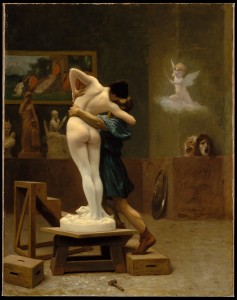 Barbara Hayes lent me her copy of Playing Pygmalion: How People Create One Another by Ruthellen Josselson. I finally finished it the weekend I went camping by myself. It was hard to read because the writing was terrible (see excerpt below) and because the copy I had was heavily marked up in black pen with underlines, circles and stars by the previous owner of the book, not by Barbara. This excerpt from page 137 is footnoted (12) which indicates that this theory is also found in Dicks (1962) Scharff (1991) and Sander (2004).
People are bonded through their mutual creations, each carrying a part of the other that the other either can’t recognize (in terms of positive aspects) or can’t bear (negative ones) in the self.
To me, this meant that I could consider taking back the parts of myself that I have been projecting onto another. For example, I used to believe that I could not go camping by myself. That is was unsafe and that if anything went wrong, I would be blamed for it (“she was asking for it”). How interesting that I was camping by myself, successfully, when I finished the book.
The copy on the back cover was much better written. “Psychoanalytic theory offers a wealth of understanding of how people unconsciously create what they both need and dread. Too often, therapists join their patients in overlooking their own role in creating the relationship in their lives, such that it seems that the patients were simply unfortunate to “have” an ungiving mother or to “find” an unloving spouse.” [image: Pygmalion and Galatea by Jean-Léon Gérôme (French, Vésoul 1824–1904 Paris) Metropolitan Museum of Art, used with permission]
 Samantha Rodman recommends these 11 questions as a way of engaging people in a positive conversation.
Why do negative comments and conversations stick with us so much longer than positive ones?
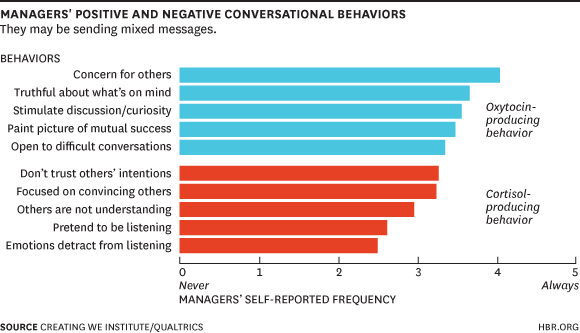
Chemistry plays a big role in this phenomenon. When we face criticism, rejection or fear, when we feel marginalized or minimized, our bodies produce higher levels of cortisol, a hormone that shuts down the thinking center of our brains and activates conflict aversion and protection behaviors. We become more reactive and sensitive. We often perceive even greater judgment and negativity than actually exists. And these effects can last for 26 hours or more, imprinting the interaction on our memories and magnifying the impact it has on our future behavior. Cortisol functions like a sustained-release tablet – the more we ruminate about our fear, the longer the impact.
Positive comments and conversations produce a chemical reaction too. They spur the production of oxytocin, a feel-good hormone that elevates our ability to communicate, collaborate and trust others by activating networks in our prefrontal cortex. But oxytocin metabolizes more quickly than cortisol, so its effects are less dramatic and long-lasting.
http://blogs.hbr.org/2014/06/the-neurochemistry-of-positive-conversations/
So many days I have just burst out loud laughing as I carry my groceries through the Trader Joe’s parking lot. I never see “What Would Jesus Do?” there, but I have seen these!

Thor
So the County cleaned him up, neutered him, then put him up for adoption. The Veterinarian commented, “Sweet cat. Robust.” He is 15 lbs of muscle and orange fur. Strong and handsome with pale green eyes, the Shelter gave him a new name, “Thor.” A month went by and no one adopted him, so they made him Cat of the Week and put his picture in the newspaper so I got him free. Even better, they threw in a bag of cat food and a bag of litter.
Turns out, he would have been free to me even if I had adopted him last week, because he is older than 6 and I am older than 55, so “Silver Paws” picks up those adoption fees.
Good thing I got to the shelter when I did. I was filling in the paperwork when another woman arrived and asked for him by name. When they told her the situation, she glanced over at me and muttered, “I hope you have a yard.” And I do. Quite defensible for a big, strong cat. And a creek full of interesting things.
I will miss the birds, though. I have found that I can have a backyard full of birds or I can have a cat. But I can’t have both.
UPDATE [June 12] Well, I guess I will have birds. I returned “Thor” to the Pound yesterday, the last day of my Two Week Free Trial.
“He’s not a ‘Thor,'” I said. “He’s no good in bed, and he’s no good on the battlefield. He is not the robust, outdoor, take-all-comers cat as advertised. He was out one night and seriously lost the fight.”

Thor’s eye was bitten and he lost the fight
As an outdoor cat, he sucks. Creamsicle was an outdoor cat with no claws. Claude was an outdoor cat, and small. They both came to me while living outside. They both fought for territory, and lost, but I never had to take either to the vet for bite wounds.
As an indoor cat, he sucks. He won’t sleep at night. In bed, he kneads incessantly, usually on the softest, most sensitive human part he can find. If he finally curls up and starts to nap, and I drop off to sleep, he suddenly YELPS and thrashes to a different position. Then I drop off to sleep and YELP again. This goes on through the night until it is elimination time and he does every noisy thing he can think of to get me to let him outside.
Then he fills my bathroom and bedroom with the redolent smell of digested cat food. Usually at daybreak. I can’t really get back to sleep after that.
I had the vet test him for intestinal parasites and giardia thinking that maybe his guts were hurting, but he was clean.
We don’t have a scratching post because we thought he was going to be an outdoor cat so he is shredding my crappy furniture.
I will keep applying warm compresses to his wound to facilitate its healing, and brushing him every day, but I can’t face 5 years of litter box cleaning and cleaning fur off my clothes. He’s going back to the Pound in three days when he looks better. Maybe he will find a home where he fits better if I give him a new name and re-write the ad. I gave the Pound this copy.
He is a very healthy cat. He’s just nocturnal.
The vet said it was unlikely he had lived on the street for 10 years. He had no scars, no feline HIV, no leukemia. I noticed that he did not jump up on sinks or kitchen counters. This was someone’s pet.
I think he would be a great pet for someone who is a Night Owl. Someone with a terrace and some way for him to prowl a small territory. He really does like to go outside, and on the his last day with me I saw that he was indeed negotiating his turf in the neighborhood.
Maybe he would have settled down if I gave him more time. I hope the new ad helps him finds the right place. The Pound says that they find homes for adoptable animals.
 Last night I auditioned for the Sonoma County Threshold Choir and by the end of the meeting I was invited to join. Three of the seven women had just returned from the International gathering of the choirs which was held in Santa Cruz. They had been singing for three days and were stoked! Ideas for songs to sing just tumbled out and they enthusiastically explored to make each song sound better.
The “what we do” page says the Threshold singers seek to bring ease and comfort to those at the threshold of living and dying. A calm and focused presence at the bedside, with gentle voices, simple songs, and sincere kindness, can be soothing and reassuring to clients, family, and caregivers alike.
They put a recliner in the center of the room and took turns being the “singee.” The bedside singers would come close and sing gently, usually with two-part harmony and often with three. No Ethel Mermans here, they all sang as if they were mostly listening. I have never before heard singing that was an unspoken dialog.
The feeling of kindness and sharing was open and palpable. The bond of the community was remarkable. They liked that I could blend with the soft and gentle sound and they were very welcoming. I am looking forward to going back.
 How could she find time to write a book with all she does? She’s a mother! And a wife, not to mention that other thing (Facebook) which she said was “very hard for the first six months. And I know I’m supposed to say ‘challenging’ but it was hard.”
I have always struggled with the concept of “niceness” and I was thrilled that she addressed it head on. I felt that if I was nice, executive men wouldn’t take me seriously. But there was another element. I started working in the 1960’s, the sexually predatory days of “Mad Men” when it was assumed that ambitious women would grant sexual favors in exchange for opportunity. Meaning that in order to get a level playing field, it was hoped that you would put out. Failing to be “nice” eradicated that illusion for executive men. It also eradicated mentoring. But in those days, mentoring by a man often meant… well, putting out.
Sheryl is of a different generation where this sexually predatory element has been mostly exterminated (whew!) but there is still the burden of being called unlikeable if a woman is perceived as decisive or ambitious. She talks at length about how the same behavior in men is admired. She is very uncomfortable with the double-standard, often enforced by other women, and she does more than complain about it. She offers a recipe for dealing with it.
She quotes Mary Sue Coleman, president of the University of Michigan, who recommends combining niceness with insistence. “Be relentlessly pleasant,” by smiling frequently, expressing appreciation and concern, invoking common interests, emphasizing larger goals, and approaching each negotiation as solving a problem as opposed to taking a critical stance.
Sheryl Sandberg also quotes Professor Hannah Riley Bowles who studies gender and negotiations at Harvard Kennedy School of Government and adds to her observations. Professor Bowles has learned that there are two crucial things that women need to do in order to succeed in negotiations. First, women must come across as being nice, concerned about others and “appropriately” female. Taking an instrumental approach, as men do, doesn’t work (This is what I want and deserve).
Second, a woman must provide a legitimate explanation for the negotiation. Men don’t have to legitimize their negotiations, they are expected to look out for themselves. Women, however, have to justify their requests. One way of doing this is to suggest that someone more senior encouraged the negotiation (“My manager suggested… “) or to cite industry standards (“My understanding is that jobs that involve this level of responsibility are compensated in this range”).
Sheryl Sandberg offers a third crucial strategy to negotiating success. “Think personally, act communally,” she advises. Even if you you feel stridently feminist when negotiating your salary in order to get paid the same as the men for the same work, keep in mind that you are negotiating for all women. “And as silly as it sounds, pronouns matter. Whenever possible, women should substitute “we for “I.” A woman’s request will be better received if she asserts, “We had a great year,” as opposed to ‘I had a great year.’ ”

I felt the book had the right balance of self-revelation and personal experience, and guidance from others. I liked the quote from Padmasree Warrior, Chief Technology & Strategy Officer of Cisco Systems, and the former CTO of Motorola because it echoes Jeffrey Immelt’s thoughts on the subject. “The ability to learn is the most important quality a leader can have.”
How to deal with people successfully was my favorite part of the book. Sheryl quotes Alice Walker who said, “The most common way people give up their power is by thinking that they don’t have any.”
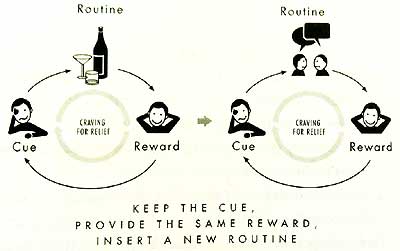
As The Brownies pointed out “as per Einstein, to keep doing the same thing and expect different results is insanity.” Charles Duhigg’s “The Power of Habit” shows us how to effectively change the routine to improve our self-mastery. “Change might not be fast and it isn’t always easy. But with time and effort, almost any habit can be reshaped,” he says.
 So much of what we do is automatic. We have to identify the habitual behavior and identify the cues that trigger actions. Eradicating a loop is unlikely. Your best bet is to change the routine you engage in when a cue kicks in.
The key to success is the reward. When your brain gets the cue, it’s going to execute the behavior to get the reward. That’s how brains work. That’s why salad diets don’t work. A salad isn’t a reward. Brains light up with grease, salt and sugar (including alcohol). Pizza and beer. No one says, “Come over for football and a salad.”
The best part of this book is the Appendix which breaks down the steps using an example from the Author’s life.
First, get mindful of your pattern. Then break it down into stimulus and response. What is the reward? Is it really a desire for cocktails or it is a desire for relaxation? Perhaps for conversation or connection with another?
When does this happen? The same time every night, like right after work, or only on Friday at 5 p.m.? He made a list of the location, time, emotional state, other people and immediately preceding action to track down the cue, writing it down every day when he felt the urge.
Step Four is to create a plan to practice a different routine to get the reward. In his example, Charles Duhigg was looking for “a moment of distraction and the opportunity to socialize.” He wanted a break at about 3 p.m. each day. In England, he might have a “cuppa tea.” In fact, that’s what he did. He made a plan to look for a friend at a desk and if no one was to be found, to go the the cafeteria and have a cup of tea, skipping the big sweet cookie that was bad for him.
Obviously, changing some habits can be more difficult. But this framework is a place to start. Sometimes change takes a long time. Sometimes it requires repeated experiments and failures. But once you understand how a habit operates — once you diagnose the cue, the routine and the reward — you gain power over it.