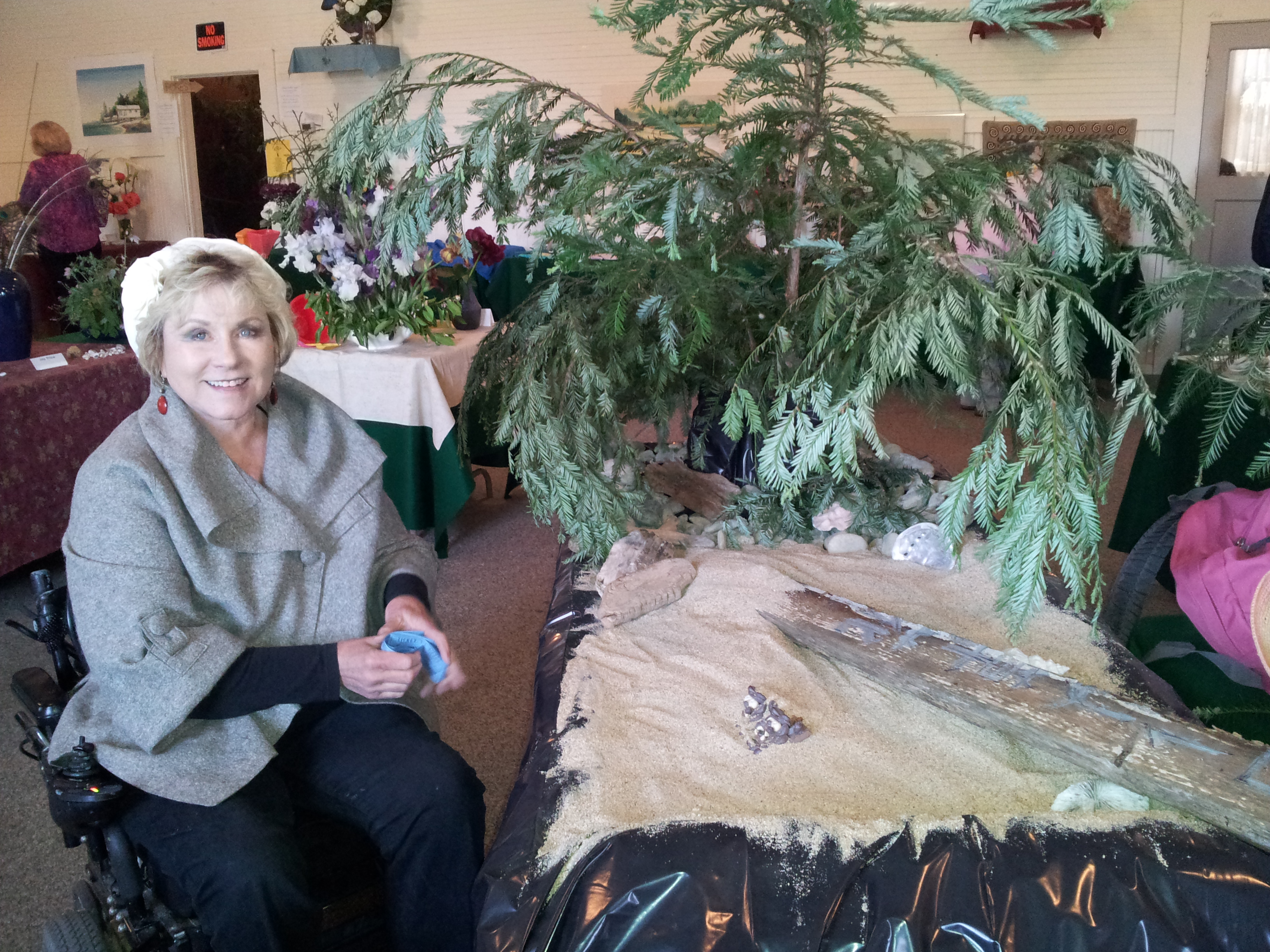
Enjoyed a great oyster barbeque by Jill Butler and her husband Jim Wilson as a thank you to the WIMP team that created a web page for Sonoma County Forest Conservation Working Group. Teammates Jake Spurlock and Ben Grace brought their families and I made friends with Jake’s three-and-a-half year old Hailey (center). Her brother Rushton is in the green shirt (green is his favorite color) and Ben’s son James is in red. I put them in the garden cart and dragged it over the gophers holes to give them a bumpy ride. So much fun!
Category Archives: News
Sugarloaf Mountain Brushy Peaks
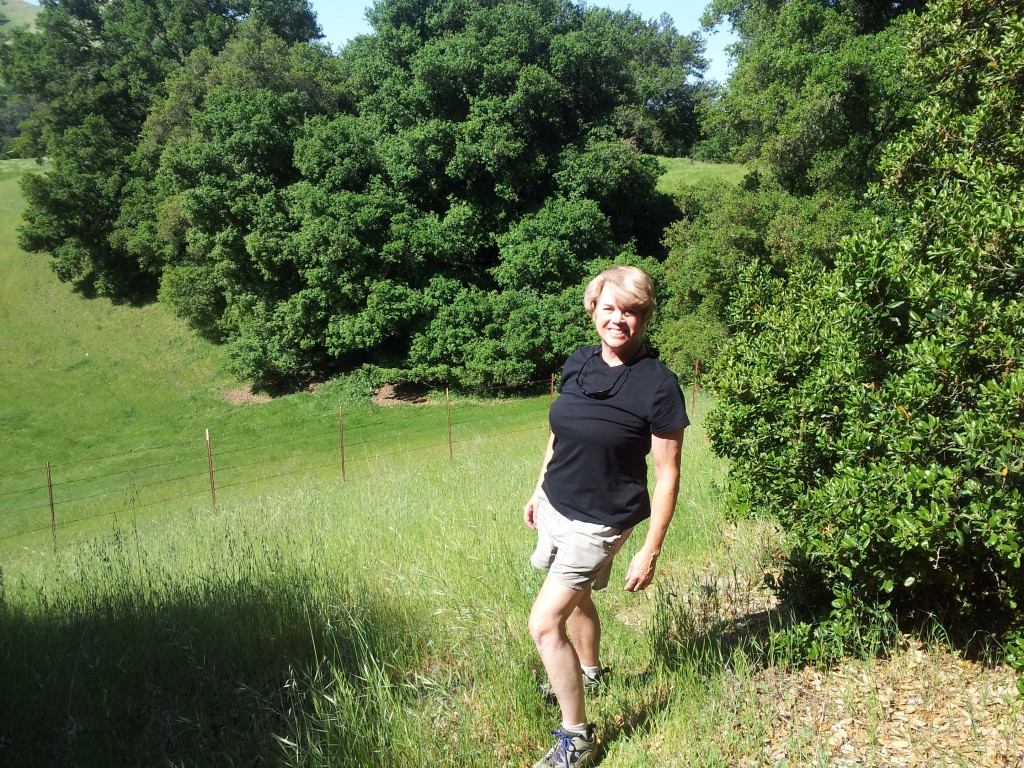
Great hike with Bob Martin’s Saturday Saunters. Started off hiking the model of the planets at Ferguson Observatory and we got to Neptune. Learned that Saturn is MUCH farther away than I thought. Had a great talk with Jill about childcare, bridge, and the meaning of retirement.
Foothill Regional Park Lupines
It was a beautiful Sunday and the lupine spread like a blue carpet on the verdant Foothill Regional Park. Even Howard enjoyed it!
Jane Goodall Visits Santa Rosa
I had a wild day on Saturday, April 6. Starting at 8:30 a.m., I worked with a team to build a website in a day, and at 8 o’clock I screams over to Santa Rosa High School to see Jane Goodall.
Nearly every seat in the 900-seat auditorium was filled. I went up to the balcony and found a single in the middle of row in the center. It wasn’t until I was seated that I realized that if I had a panic attack I would really have to climb over a lot of people. I used the Panic Away technique to stay put until Dr. Goodall came out.
The applause was thunderous. She was in Santa Rosa on her book tour without a book. The publication has been postponed but the local bookstore filled the auditorium. In Santa Rosa, we read.
The Jane Goodall lecture was great. She spoke about her childhood in England and how she came study chimpanzees. It was clear that her mother was supportive of her curiosity her whole life, and even “packed up and moved to Kenya” because the authorities would not allow Jane out in the bush on her first assignment without a companion. So her mother went with her.
Jane said, “that was back before no-see-um mesh was invented. If we opened the flaps of the army surplus tent to let in some air, we also let in snakes, scorpions and spiders.”
She mentioned that she had turned 79 a few days before and at the end of her lecture, all 900 of us sang Happy Birthday to her. Best live lecture I’ve seen since I saw Stephen Hawking speak at CalTech. His first words were, “Can you hear me?” and 900 scientists breathed, “Yes.”
Here’s my funky cellphone shot.
WIMP Hackathon Website in a Day
Flanked by teammates Jake Spurlock and Ben Grace, with client Jill Butler from Sonoma County Forest conservation Working Group, our prize-winning website-in-a-day. Ben designed it, along with custom redesign of their logo and letterhead (held by client) and Jake programmed it using WordPress and Bootstrap.
Zapped – Know Your Pollution
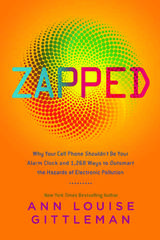
“Why your Cell Phone Shouldn’t Be Your Alarm Clock and 1,268 Ways to Outsmart the Hazards of Electronic Pollution” is the long subtitle of this book by Ann Louise Gittleman. Because my husband uses his old-fashioned cell phone (not a smart phone that constantly checks Email) as an alarm clock, I hoped this would persuade him to try something different but… no dice.
It prompted me to get a fabric catalog from LessEMF.com so I could make field-dampening pillow cases. (Haven’t done it yet.) You can also get meters to determine how much EMF you have or Stetzerizers to filter out the offending wavelengths (also called Graham-Stetzer filters).
Page 8 offers a chart of infrequences emitted by everyday things from microwaves to power lines.It goes on to explain
“Like everything else in our world, our bodies and every organ and tissue they contain have their own distinct frequency. The late Bruce Tainio… built the first frequency monitor in the world.. and determined that the average frequency of the human body during the daytime is 62-68 Hz. When the frequency drops to 58 Hz, cold and flu symptoms appear; at 55 Hz, disorders like candida take hold, at 52 Hz, Epstein-Barr, and at 42 Hz, cancer.”
The author talks about the work of Nobel Prize winner Gunter Blobel, M.D., Ph.D, who established that cell signaling includes frequencies (energetic signals) which are picked up by peptides. He also studied with Hazel Parcells, M.D., Ph.D. who taught Ms. Gittleman to think of each cell in the body as an electric battery broadcasting the pulsating rhythm of life. When you change the energy, you change how effectively the cells work.
Zapped directed me to AntennaSearch.com where I found these diagrams of the wireless towers near my house. I was relieved because it was so much less than the blasting RF I was exposed to when I worked in a TV station in San Francisco for seven years.

Antenna Search map results
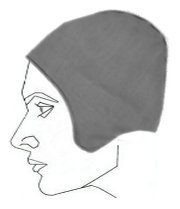
My favorite product, one purchased by a friend of mine when she realized how much wireless pollution she was exposed to, is her “tin foil hat.” She wears it most nights, taking a break from time to time because it seems to be so effective that it interferes with dreams. Described in the catalog as, “Stretchy Silver-coated nylon skull cap with ear flaps is lightweight and breathes nicely. Comfortable enough to wear year-round while sleeping, thin enough to be worn under a conventional hat or all on its own.” The perfect gift for someone who has everything.
Change the Habit, Don’t Break It

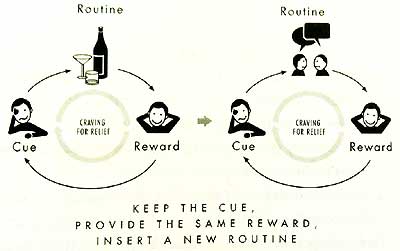
As The Brownies pointed out “as per Einstein, to keep doing the same thing and expect different results is insanity.” Charles Duhigg’s “The Power of Habit” shows us how to effectively change the routine to improve our self-mastery. “Change might not be fast and it isn’t always easy. But with time and effort, almost any habit can be reshaped,” he says.
So much of what we do is automatic. We have to identify the habitual behavior and identify the cues that trigger actions. Eradicating a loop is unlikely. Your best bet is to change the routine you engage in when a cue kicks in.
The key to success is the reward. When your brain gets the cue, it’s going to execute the behavior to get the reward. That’s how brains work. That’s why salad diets don’t work. A salad isn’t a reward. Brains light up with grease, salt and sugar (including alcohol). Pizza and beer. No one says, “Come over for football and a salad.”
The best part of this book is the Appendix which breaks down the steps using an example from the Author’s life.
- Identify the routine
- Experiment with rewards
- Isolate the cue
- Have a plan
First, get mindful of your pattern. Then break it down into stimulus and response. What is the reward? Is it really a desire for cocktails or it is a desire for relaxation? Perhaps for conversation or connection with another?
Step Three: Isolate the Cue
When does this happen? The same time every night, like right after work, or only on Friday at 5 p.m.? He made a list of the location, time, emotional state, other people and immediately preceding action to track down the cue, writing it down every day when he felt the urge.
Step Four is to create a plan to practice a different routine to get the reward. In his example, Charles Duhigg was looking for “a moment of distraction and the opportunity to socialize.” He wanted a break at about 3 p.m. each day. In England, he might have a “cuppa tea.” In fact, that’s what he did. He made a plan to look for a friend at a desk and if no one was to be found, to go the the cafeteria and have a cup of tea, skipping the big sweet cookie that was bad for him.
Obviously, changing some habits can be more difficult. But this framework is a place to start. Sometimes change takes a long time. Sometimes it requires repeated experiments and failures. But once you understand how a habit operates — once you diagnose the cue, the routine and the reward — you gain power over it.

Spring Lake Has a Beaver

Sheila Albert was so kind to invite me on her birthday walk around Spring Lake. Her partner, Bob Brannigan, arranged the special birding walk with their dear friends Bill, Judy, Steve and photographer-naturalist Tom Reynolds. With binoculars and bird books (and an iPhone app) we looked at twitters, flutters, swimmers, nests and habitats for beaver (pictured) muskrat, otters and mink.
A spectacular green heron (immature) posed for us in perfect light. Too far for me to photograph but I’m sure Bill got something great.
I especially enjoyed learning how to recognize a squirrel nest. Tom is an amazing source of knowledge. Judy was delighted to learn that racoons could be encouraged to depart their encampment under a deck with the scattering of mountain lion scat acquired from the Sonoma County wildlife shelter near the landfill on Reibli Rd.
And frozen paths are not muddy. Yea!
Cabbages – Dining Room Window

Cabbages like the cold winter sun
Zen, SAMe and Ear Wax
I have had a bad week. Last Thursday, after a shower, I dried my ear with a twist of toilet paper and plugged up one ear. I ignored it, and on Friday I increased my SAMe intake from two tablets a day to three, shrugging off the warning of increased agitation.
Saturday morning the ear was still plugged up so I went after it with a Qtip, driving the wax so far into my ear that it triggered feelings of claustrophobia. To distract myself, I went to see “Zero Dark Thirty” about brutal interrogation, waterboarding, and a Seal assault leading to death. I was so overwhelmed with the feeling of suffocation I had to leave the theater three times in the first hour. The feeling of being choked was so strong I actually took off my necklace. Yet I took a third SAMe for the day right after the movie.
Saturday night I felt like I was dying. My mind said, “it’s just earwax. You’re not going to die of earwax.” but my body really ached up the center line from my solar plexus to my heart.
My early-life decision came back: No one would help me. They were going to leave me me die. I had such a strong “felt sense” of being a sick child with plugged ears and a stuffed nose and not being able to breathe. I felt like I was being punished for being bad.
I know that at the age pictured, with two smokers in their early 20s for parents, I had frequent bouts of tonsillitis and upper respiratory congestion. My long hair would get matted when I was sick and I hated having it combed out. In frustration, they may have decided to “just let her cry.”
I kept going outside for walks in the 25-degree night because it was the only time I felt I had enough space or enough air. My mind said, “You don’t breathe through your ears. This is discomfort. You can tolerate it.” I did not wake up my husband because there was nothing he could do to help me. I started to understand what Xanax is for.
Vulnerable means Woundable. Can we try “Receptive”?
I try to fix things myself. I was so frustrated that I could not see into my ear. I knew the Emergency Room on a Sunday in January would be full of people with the flu coughing on me because ear wax would be called last. By mid-morning I realized that a neighbor I sometimes speak to is a retired doctor. I knocked on her door at noon. Nothing.
By mid-afternoon she was back and was happy to rinse out my ear with a dilute solution of hydrogen peroxide. She got it unplugged. I was SOO relieved. Went to the store and got her a $20 bottle of French wine. But I didn’t sleep that night. The agitation was almost as bad, except this time I could hear with both ears. I found a pile of leaves on the sidewalk nearby. Crunching though them at midnight calmed me.
Monday morning it took 2 hours to get a doctor appointment, and they wouldn’t give me one on the same day. Another bad night, but I stayed inside. Tuesday the young doctor scraped the wax off my eardrums and it hurt! “I thought you had suction!” I yelped. But I can hear better now.
What I Learned
As toddlers, we really are helpless, but the “learned helplessness” can be crippling in later life and can become part of the foundation of depression. To climb out of the harmful early leaning, I can learn to look for the Helpers, and to ask for help. I now have tools that I did not have as a pre-schooler, including Reiki, Zen Mind, Compassion and other spiritual and mental tools.
I should let my ears drain naturally, not even a hair dryer, because ear wax is supposed to stay pliable so it doesn’t stick to your eardrum. Lateral jaw action and an occasional, single drop of mineral oil in the ear will help keep it pliable.
I should have started the search for an ear doctor right away. The feeling of dying can be very scary. Three SAMe tablets is too many.